News
Escalating Tensions On The Lebanon-Israel Border Heighten Concerns Of Broader Conflict

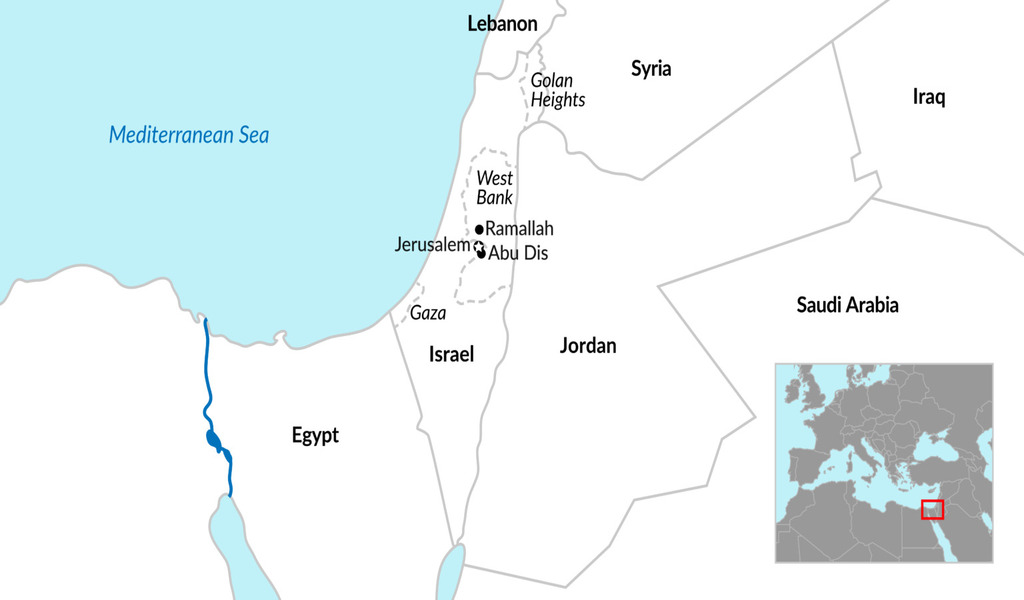
(CTN NEWS) – The crossfire occurring on Lebanon’s border with Israel may seem limited in scale compared to the conflict between Hamas and Israel further south.
The fighting has been confined to a relatively small area along the demarcation line, resulting in at least 13 casualties since it began last Saturday.
However, despite the seemingly localized nature of this conflict, it has the potential to escalate into a regional war with involvement from multiple actors, including Iran and the United States.
Hezbollah, an Iran-backed armed group, wields significant influence in southern Lebanon and operates in partnership with Iran’s elite Revolutionary Guard Corps in Syria.
This connection places Hezbollah in close proximity to the Israeli-occupied Golan Heights, where it operates alongside Tehran-aligned forces. The situation is complex and fraught with regional implications.
The current border skirmishes may serve as a flashpoint that could trigger a broader conflict, drawing in various regional and international players.
The risk of escalation should not be underestimated, and diplomatic efforts to defuse tensions and prevent a wider conflict are crucial.

Iran’s Foreign Minister Amir Abdollahian has expressed concerns over the possibility of expanded fighting and has discussed the situation with counterparts from several countries.
He emphasized the urgent need to stop Israeli actions in Gaza and provide humanitarian aid. He also warned of the diminishing prospects for political solutions and the increasing likelihood of the conflict spreading to other fronts.
The rising civilian death toll, particularly among Palestinian civilians, including many children, has ignited anger and concern across the Arab and Muslim world, amplifying the potential for further regional tensions.
The United States’ deployment of two large aircraft carriers to the eastern Mediterranean is a significant and concerning development.
It underscores the potential for a broader conflict if the situation on the Lebanon-Israel border escalates into a full-scale war. The situation remains highly volatile, and diplomatic efforts are urgently needed to prevent a wider regional conflict.
Skirmishes Escalate into Serious Clashes
The recent skirmishes in the Lebanon-Israel border region initially began as a series of low-level exchanges of fire between militants in Lebanon and Israeli forces.
The escalation followed a surprise attack by Hamas on October 7 when Palestinian militants fired rockets from Lebanon into Israel, prompting an Israeli response.
The cycle of violence included rocket launches from Lebanon, Israeli fire into Lebanese territory (including at Hezbollah positions), and Hezbollah launching missiles into northern Israel.
These exchanges resulted in casualties, with three Israeli soldiers and three Hezbollah fighters killed by Friday morning.
The situation remained tense and volatile, with the potential for further escalation. Diplomatic efforts were needed to prevent a wider regional conflict.
The escalation of hostilities continued as, on Friday around 5 p.m., a tragic incident occurred when Reuters journalist Issam Abdallah, who was from southern Lebanon, was killed in an Israeli strike.
This strike also wounded at least six other international journalists. Video evidence clearly showed that the journalists were wearing vests marked as “press.”
An Israeli Apache helicopter was flying over their location, and according to Lebanese security sources and video footage seen by CNN, the journalists were fired upon by artillery, as indicated by both Lebanese army and Israeli statements.
Israel stated that it was investigating the incident and mentioned that it had been shelling Lebanese territory with artillery fire in response to an explosion at a border fence in Israel’s Hanita, near where Issam Abdallah was tragically killed.

The situation at the Lebanon-Israel border continued to deteriorate over the next days.
On Saturday, Hezbollah launched a series of strikes at Israeli targets in the disputed Shebaa Farms region, followed by a barrage of artillery fire from Israel.
The tensions escalated on Sunday when Lebanese militants fired at several Israeli locations along the border, resulting in the death of one civilian and one soldier.
Israel, in response, declared a closed military zone within the 4-kilometer area near its border.
Hezbollah’s cross-border attacks were explicitly linked to the killing of journalist Issam Abdallah and two elderly civilians in Israeli attacks in the border region on Sunday.
Hezbollah’s attacks demonstrated precision using Russian anti-tank guided missiles known as Kornets.
After each attack, Hezbollah released videos showcasing their precision and the direct hits that surprised Israeli troops seen in the videos.
These videos play a critical role in the psychological warfare that underpins this conflict, highlighting the increased sophistication of Hezbollah’s arsenal since the 2006 Lebanon-Israel war, when they relied largely on inaccurate Soviet-era Katyusha rockets.
That conflict ended with no clear victor, but Hezbollah thwarted Israel’s plan to dismantle the group, challenging Israel’s aura of invincibility.
Hezbollah has significantly built up its arsenal over the years, and its fighters have gained extensive experience in urban warfare through their involvement in the conflict in Syria.
They have battled various factions, including ISIS and al-Qaeda-affiliated groups, as well as those attempting to overthrow Syrian President Bashar al-Assad.
Hezbollah’s leader, Hassan Nasrallah, has alluded to the possibility of his fighters conducting an incursion into northern Israel should a new war erupt between Lebanon and Israel.
Precision-guided missiles used by Hezbollah during the recent conflict have raised concerns among Israeli and U.S. officials.
Nasrallah has claimed that his group has over 100,000 fighters and reservists.
Historically, both Israeli and U.S. officials have taken these claims seriously, given the group’s growth in size and power under Nasrallah’s leadership.
However, Nasrallah has been conspicuously silent since October 7, and the reasons for his silence are uncertain.
In recent addresses, he praised the growing alliance between Hezbollah and Hamas, even though the two groups were on opposing sides during the Syrian civil war.
Nasrallah also hinted at a potential shift in the rules of engagement between Hezbollah and Israel, indicating that the group might intervene on behalf of the Palestinians.
This has led many observers to speculate that Hezbollah may expand its fight against Israel if Israel launches a ground invasion into Gaza.
The situation remains unpredictable, and world leaders are closely monitoring developments along the Lebanon-Israel border with apprehension.
MORE RELATED NEWS:
El Deif, The Alleged Mastermind Of The Hamas Attack: What You Need To Know
Poland’s Law And Justice Party Leads In General Election, Third Term Uncertain
EU Regulators Delay Approval For Novavax’s Variant-Tailored Covid-19 Vaccine

News
Google’s Search Dominance Is Unwinding, But Still Accounting 48% Search Revenue

Google is so closely associated with its key product that its name is a verb that signifies “search.” However, Google’s dominance in that sector is dwindling.
According to eMarketer, Google will lose control of the US search industry for the first time in decades next year.
Google will remain the dominant search player, accounting for 48% of American search advertising revenue. And, remarkably, Google is still increasing its sales in the field, despite being the dominating player in search since the early days of the George W. Bush administration. However, Amazon is growing at a quicker rate.

Google’s Search Dominance Is Unwinding
Amazon will hold over a quarter of US search ad dollars next year, rising to 27% by 2026, while Google will fall even more, according to eMarketer.
The Wall Street Journal was first to report on the forecast.
Lest you think you’ll have to switch to Bing or Yahoo, this isn’t the end of Google or anything really near.
Google is the fourth-most valued public firm in the world. Its market worth is $2.1 trillion, trailing just Apple, Microsoft, and the AI chip darling Nvidia. It also maintains its dominance in other industries, such as display advertisements, where it dominates alongside Facebook’s parent firm Meta, and video ads on YouTube.
To put those “other” firms in context, each is worth more than Delta Air Lines’ total market value. So, yeah, Google is not going anywhere.
Nonetheless, Google faces numerous dangers to its operations, particularly from antitrust regulators.
On Monday, a federal judge in San Francisco ruled that Google must open up its Google Play Store to competitors, dealing a significant blow to the firm in its long-running battle with Fortnite creator Epic Games. Google announced that it would appeal the verdict.
In August, a federal judge ruled that Google has an illegal monopoly on search. That verdict could lead to the dissolution of the company’s search operation. Another antitrust lawsuit filed last month accuses Google of abusing its dominance in the online advertising business.
Meanwhile, European regulators have compelled Google to follow tough new standards, which have resulted in multiple $1 billion-plus fines.

Pixa Bay
Google’s Search Dominance Is Unwinding
On top of that, the marketplace is becoming more difficult on its own.
TikTok, the fastest-growing social network, is expanding into the search market. And Amazon has accomplished something few other digital titans have done to date: it has established a habit.
When you want to buy anything, you usually go to Amazon, not Google. Amazon then buys adverts to push companies’ products to the top of your search results, increasing sales and earning Amazon a greater portion of the revenue. According to eMarketer, it is expected to generate $27.8 billion in search revenue in the United States next year, trailing only Google’s $62.9 billion total.
And then there’s AI, the technology that (supposedly) will change everything.
Why search in stilted language for “kendall jenner why bad bunny breakup” or “police moving violation driver rights no stop sign” when you can just ask OpenAI’s ChatGPT, “What’s going on with Kendall Jenner and Bad Bunny?” in “I need help fighting a moving violation involving a stop sign that wasn’t visible.” Google is working on exactly this technology with its Gemini product, but its success is far from guaranteed, especially with Apple collaborating with OpenAI and other businesses rapidly joining the market.
A Google spokeswoman referred to a blog post from last week in which the company unveiled ads in its AI overviews (the AI-generated text that appears at the top of search results). It’s Google’s way of expressing its ability to profit on a changing marketplace while retaining its business, even as its consumers steadily transition to ask-and-answer AI and away from search.

Google has long used a single catchphrase to defend itself against opponents who claim it is a monopoly abusing its power: competition is only a click away. Until recently, that seemed comically obtuse. Really? We are going to switch to Bing? Or Duck Duck Go? Give me a break.
But today, it feels more like reality.
Google is in no danger of disappearing. However, every highly dominating company faces some type of reckoning over time. GE, a Dow mainstay for more than a century, was broken up last year and is now a shell of its previous dominance. Sears declared bankruptcy in 2022 and is virtually out of business. US Steel, long the foundation of American manufacturing, is attempting to sell itself to a Japanese corporation.
SOURCE | CNN
News
2024 | Supreme Court Won’t Hear Appeal From Elon Musk’s X Platform Over Warrant In Trump Case
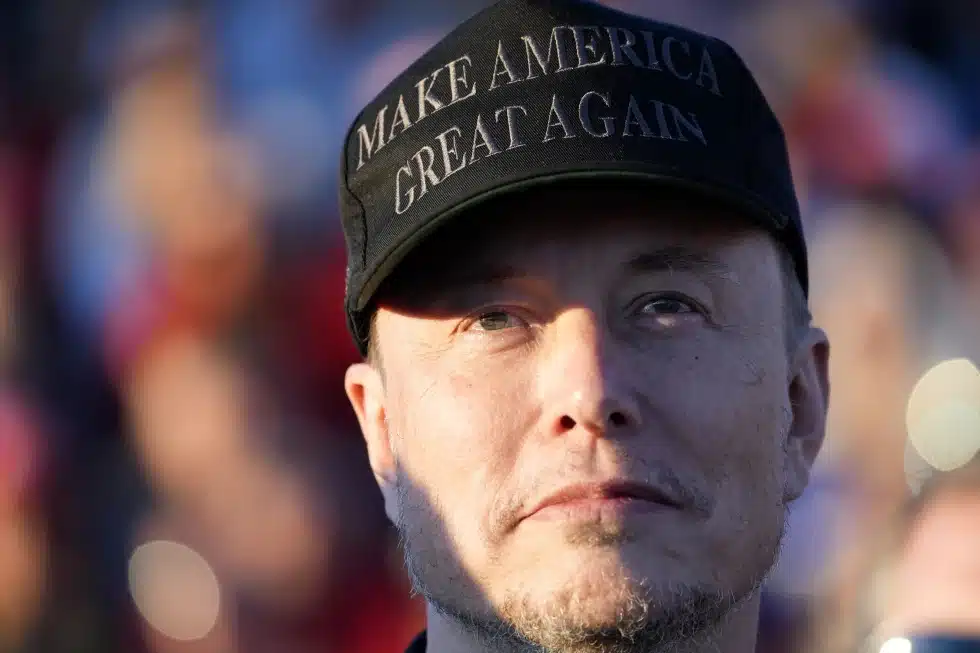
Washington — Trump Media, The Supreme Court announced Monday that it will not hear an appeal from social media platform X about a search warrant acquired by prosecutors in the election meddling case against former President Donald Trump.
The justices did not explain their rationale, and there were no recorded dissents.
The firm, which was known as Twitter before being purchased by billionaire Elon Musk, claims a nondisclosure order that prevented it from informing Trump about the warrant obtained by special counsel Jack Smith’s team violated its First Amendment rights.
The business also claims Trump should have had an opportunity to exercise executive privilege. If not reined in, the government may employ similar tactics to intercept additional privileged communications, their lawyers contended.

Supreme Court Won’t Hear Appeal From Elon Musk’s X Platform Over Warrant In Trump Case
Two neutral electronic privacy groups also joined in, urging the high court to hear the case on First Amendment grounds.
Prosecutors, however, claim that the corporation never shown that Trump utilized the account for official purposes, therefore executive privilege is not a problem. A lower court also determined that informing Trump could have compromised the current probe.

Trump utilized his Twitter account in the weeks preceding up to his supporters’ attack on the Capitol on January 6, 2021, to spread false assertions about the election, which prosecutors claim were intended to create doubt in the democratic process.
The indictment describes how Trump used his Twitter account to encourage his followers to travel to Washington on Jan. 6, pressuring Vice President Mike Pence to reject the certification, and falsely claiming that the Capitol crowd, which battered police officers and destroyed glass, was peaceful.

Supreme Court Won’t Hear Appeal From Elon Musk’s X Platform Over Warrant In Trump Case
That case is now moving forward following the Supreme Court’s verdict in July, which granted Trump full immunity from criminal prosecution as a former president.
The warrant arrived at Twitter amid quick changes implemented by Musk, who bought the company in 2022 and has since cut off most of its workforce, including those dedicated to combating disinformation and hate speech.
SOURCE | AP
News
The Supreme Court Turns Down Biden’s Government Appeal in a Texas Emergency Abortion Matter.
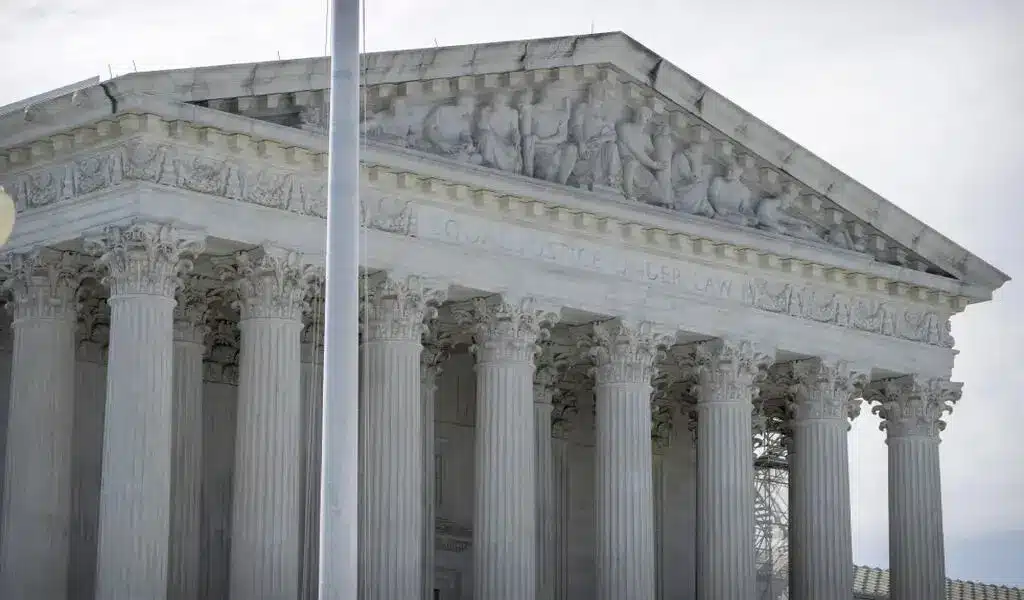
(VOR News) – A ruling that prohibits emergency abortions that contravene the Supreme Court law in the state of Texas, which has one of the most stringent abortion restrictions in the country, has been upheld by the Supreme Court of the United States. The United States Supreme Court upheld this decision.
The justices did not provide any specifics regarding the underlying reasons for their decision to uphold an order from a lower court that declared hospitals cannot be legally obligated to administer abortions if doing so would violate the law in the state of Texas.
Institutions are not required to perform abortions, as stipulated in the decree. The common populace did not investigate any opposing viewpoints. The decision was made just weeks before a presidential election that brought abortion to the forefront of the political agenda.
This decision follows the 2022 Supreme Court ruling that ended abortion nationwide.
In response to a request from the administration of Vice President Joe Biden to overturn the lower court’s decision, the justices expressed their disapproval.
The government contends that hospitals are obligated to perform abortions in compliance with federal legislation when the health or life of an expectant patient is in an exceedingly precarious condition.
This is the case in regions where the procedure is prohibited. The difficulty hospitals in Texas and other states are experiencing in determining whether or not routine care could be in violation of stringent state laws that prohibit abortion has resulted in an increase in the number of complaints concerning pregnant women who are experiencing medical distress being turned away from emergency rooms.
The administration cited the Supreme Court’s ruling in a case that bore a striking resemblance to the one that was presented to it in Idaho at the beginning of the year. The justices took a limited decision in that case to allow the continuation of emergency abortions without interruption while a lawsuit was still being heard.
In contrast, Texas has been a vocal proponent of the injunction’s continued enforcement. Texas has argued that its circumstances are distinct from those of Idaho, as the state does have an exemption for situations that pose a significant hazard to the health of an expectant patient.
According to the state, the discrepancy is the result of this exemption. The state of Idaho had a provision that safeguarded a woman’s life when the issue was first broached; however, it did not include protection for her health.
Certified medical practitioners are not obligated to wait until a woman’s life is in imminent peril before they are legally permitted to perform an abortion, as determined by the state supreme court.
The state of Texas highlighted this to the Supreme Court.
Nevertheless, medical professionals have criticized the Texas statute as being perilously ambiguous, and a medical board has declined to provide a list of all the disorders that are eligible for an exception. Furthermore, the statute has been criticized for its hazardous ambiguity.
For an extended period, termination of pregnancies has been a standard procedure in medical treatment for individuals who have been experiencing significant issues. It is implemented in this manner to prevent catastrophic outcomes, such as sepsis, organ failure, and other severe scenarios.
Nevertheless, medical professionals and hospitals in Texas and other states with strict abortion laws have noted that it is uncertain whether or not these terminations could be in violation of abortion prohibitions that include the possibility of a prison sentence. This is the case in regions where abortion prohibitions are exceedingly restrictive.
Following the Supreme Court’s decision to overturn Roe v. Wade, which resulted in restrictions on the rights of women to have abortions in several Republican-ruled states, the Texas case was revisited in 2022.
As per the orders that were disclosed by the administration of Vice President Joe Biden, hospitals are still required to provide abortions in cases that are classified as dire emergency.
As stipulated in a piece of health care legislation, the majority of hospitals are obligated to provide medical assistance to patients who are experiencing medical distress. This is in accordance with the law.
The state of Texas maintained that hospitals should not be obligated to provide abortions throughout the litigation, as doing so would violate the state’s constitutional prohibition on abortions. In its January judgment, the 5th United States Circuit Court of Appeals concurred with the state and acknowledged that the administration had exceeded its authority.
SOURCE: AP
SEE ALSO:
Could Last-Minute Surprises Derail Kamala Harris’ Campaign? “Nostradamus” Explains the US Poll.
-

 News4 years ago
Let’s Know About Ultra High Net Worth Individual
-
Entertainment2 years ago
Mabelle Prior: The Voice of Hope, Resilience, and Diversity Inspiring Generations
-
News11 years ago
Enviromental Groups Tell Mekong Leaders Lao Dam Evaluation Process Flawed
-

 Health4 years ago
How Much Ivermectin Should You Take?
-

 Tech3 years ago
Top Forex Brokers of 2023: Reviews and Analysis for Successful Trading
-

 Lifestyles3 years ago
Aries Soulmate Signs
-

 Entertainment3 years ago
What Should I Do If Disney Plus Keeps Logging Me Out of TV?
-

 Health3 years ago
Can I Buy Ivermectin Without A Prescription in the USA?