Legal
Why Register an IBC in Marshall Islands

The Marshall Islands is an offshore jurisdiction that is suitable for some types of business operations while unsuitable for some other types.
An IBC in the Marshall Islands: What Business Purposes Does It Fit?
The Marshall Islands is a tiny but extremely beautiful country in Micronesia with a population of less than sixty thousand people.
It has been on the list of offshore countries for many years and we must admit that some other offshore countries enjoy a better reputation in the business world than the Marshall Islands do.
If you are considering the opportunity to register an offshore company, the jurisdiction might be not your first choice in some cases.
At the same time, registering an IBC (International Business Corporation) in the Marshall Islands can be a very good idea if you have certain specific purposes.
When the de-offshorization processes started, the Marshall Islands initially put up a fight against the huge and powerful organizations involved in these processes such as the OECD and FATF.
The islanders tried to retain the properties of their legislation that made the jurisdiction attractive for foreign investors.
Similarly to many other island states, the Marshall Islands is a comparatively poor country.
But how can a country with the population of only sixty thousand people resist the pressure from international agencies that are so dominant?
Thus, eventually, the Marshalls had to give in and adapt their corporate legislation to the contemporary international requirements.
This adaptation has allowed the island state to leave the black lists so today it is considered a ‘cooperating’ country.
That is to say, the jurisdiction is perfectly ‘clean’ in the eyes of the international business communities and regulating agencies.
Registering an IBC in the Marshall Islands would NOT suit certain types of business. If you are involved or if you are planning to get involved in banking, in insurance or reinsurance, the jurisdiction is not for you.
It is not going to be difficult to engage in these types of activities with your Marshalls-based company, it is going to be simply impossible to register an IBC for these purposes there.
Besides, if you would like to set up an offshore trust, you’d be better off opting for some other jurisdiction.
Finally, if you are engaged in any sort of gaming or gambling activities, including online gambling, do not choose the Marshall Islands. Go somewhere else, for example, to Gibraltar.
What types of business activities are suitable for registering an IBC in the Marshall Islands? First of all, the jurisdiction is highly popular with the owners of marine vessels of all types, be it merchant ships or ocean yachts.
The Marshalls is among the smallest countries of the world while its ship register is among the largest ones! More than 1,600 ships are registered in the country.
It goes without saying that their owners come from many different places. The Marshalls ship register is well-respected in the world and the system of related services that the locals provide to ship owners is superb.
You can also consider opening an IBC in the Marshall Islands if you are planning to eventually launch an IPO.
International investors are well aware of the fact that withdrawing from investments is not going to be a problem if the company whose shares they bought is registered in the Marshall Islands.
Obviously, this makes investing in it less risky, which turns it into a more inviting opportunity.
Around four hundred Marshalls-based companies have launched IPOs in recent years. So if you would like to raise some funds for your company by going public, you should seriously consider establishing an IBC in the Marshall Islands.
A company in the Marshalls can suit one more business area. Many entrepreneurs who do business solely online choose the jurisdiction to register their companies there.
The local legislation fits this type of business very well. Please keep in mind that this excludes online gambling.
What requirements would you have to meet if you chose to register a company in the Marshall Islands?
First, there are economic substance requirements: you have to have an office and a legal address in the Marshalls if you are to have a company in this jurisdiction.
We suggest that you should seek advice from specialists who provide offshore services on this matter as well as other matters related to registering a foreign company.
Second, your company shall have at least two officers – the director and the company secretary. Both natural persons and legal entities can act as company directors and secretaries in the Marshall Islands.
Please bear in mind, however, that if you would like to make a corporate entity your company director or secretary, more paperwork is going to be involved.
A natural person has to submit only a personal ID and proof of residential address if he or she is going to be the director/ secretary when applying for company registration.
If a legal entity is going to fulfill one (or both) of these roles, the entire set of corporate documents has to be submitted to the Registrar in the Marshalls.
Please note that the legislation of the country allows hiring nominee directors and secretaries.
This is an opportunity to keep the company owner’s identity concealed from the public.
But only from the public: you will have to reveal to the Registrar the real names of all beneficiary company owners when you register an IBC in the Marshall islands.
Finally, there are no requirements as to the Marshalls-based IBC charter capital. You can make it as small as US$ 1.
As you can see, the Marshalls can suit some business purposes if you register a company there and the country is unsuitable for some other business purposes.
Simply keep the Marshall Islands on your radar and investigate other offshore opportunities. These are not as plentiful as they used to be before but you can still find some business benefits if you go offshore.
Related CTN News:
9 Most Stunning Places In The World To Photograph

Legal
Thai Court Amends Law to Allows Wives to Sue Husband’s Lovers

Thailand’s Constitutional Court has changed the Civil Code will allow women to sue their husbands’ lovers, male or female. The Constitutional Court found on Tuesday that Section 1523 of the Civil Code breached Section 27 of the constitution, which safeguards Thais’ rights and liberties regardless of gender.
The court directed that the verdict be enforced within 360 days.
Section 1523 of the Civil Code states that husbands can sue their wives’ lovers, and wives can sue other women who publicly display an adulterous connection with their husband.
Keirov Kritteeranon, secretary-general of the Office of the Ombudsman, stated that the Ombudsman had previously urged the court to rule on the legality of Section 1523, which allowed wives to suit only female lovers.
Husbands can now sue their wives’ boyfriends regardless of gender, and there was no requirement for any public declaration of an adulterous connection, he claimed.
Once enforced, Tuesday’s Constitutional Court order, according to the Ombudsman, will correct this imbalance.
Thailand Amends Marriage Law
Meanwhile, Thailand is set to become the first Southeast Asian country to recognise same-sex marriage, after its marriage equality law was passed in the Upper House on Tuesday and is now on its approach to being promulgated before going into effect in the coming months.
LGBTQ+ advocates rejoiced as the Senate voted 130-4 to pass the bill on its final reading, with 18 abstentions. They hailed the development as a win in their long struggle for equal rights.
When the advocates who had gathered at parliament on Tuesday to witness the Senate’s final reading and vote on the measure heard the outcome, they burst out in cheers.
They next went to authorities House, where the authorities had planned a celebratory reception for them later in the day. They then went to the Bangkok Art and Culture Centre, where the party lasted until late at night.
Prime Minister Srettha Thavisin, who is on sick leave due to Covid-19, congratulated them via Zoom call from Government House.
The new law will allow any two people aged 18 or older to register their marriage and obtain the same advantages and rights as heterosexual couples. The bill refers to married couples as “two individuals” rather than “a man and a woman,” and changes their legal status from “husband and wife” to “spouses.”
LGBTQ+ people from any country can legally marry in Thailand. When the bill goes into force, foreign same-sex married partners will be eligible for a spousal visa.
The law will be sent to the government for approval before being presented to the monarch.
It will take effect within 120 days of its publication in the Royal Gazette, making Thailand the third Asian country to accept same-sex marriages after Nepal and Taiwan.
Senator Kamnoon Sidhisamarn, spokesman for the Senate’s special committee evaluating the proposed law, called it a victory for equal rights campaigners.
“There is no reason for the Upper House to disagree with the judgement made by the House of Representatives,” he told reporters. He was referring to the legislation’s passage in the Lower House prior to its submission to the Senate for approval.
The battle for same-sex marriage legislation began 23 years ago. Tunyawaj Kamolwongwat, a Move Forward Party list-MP, said that the law’s passage on Tuesday signified the beginning of a new chapter in Thai history.
Source: Bangkok Post
Court Upholds Israel’s Ban on News Agency Al Jazeera
Legal
Thailand’s Senate Passes Landmark Marriage Equity Bill Legalizing Gay Marriage
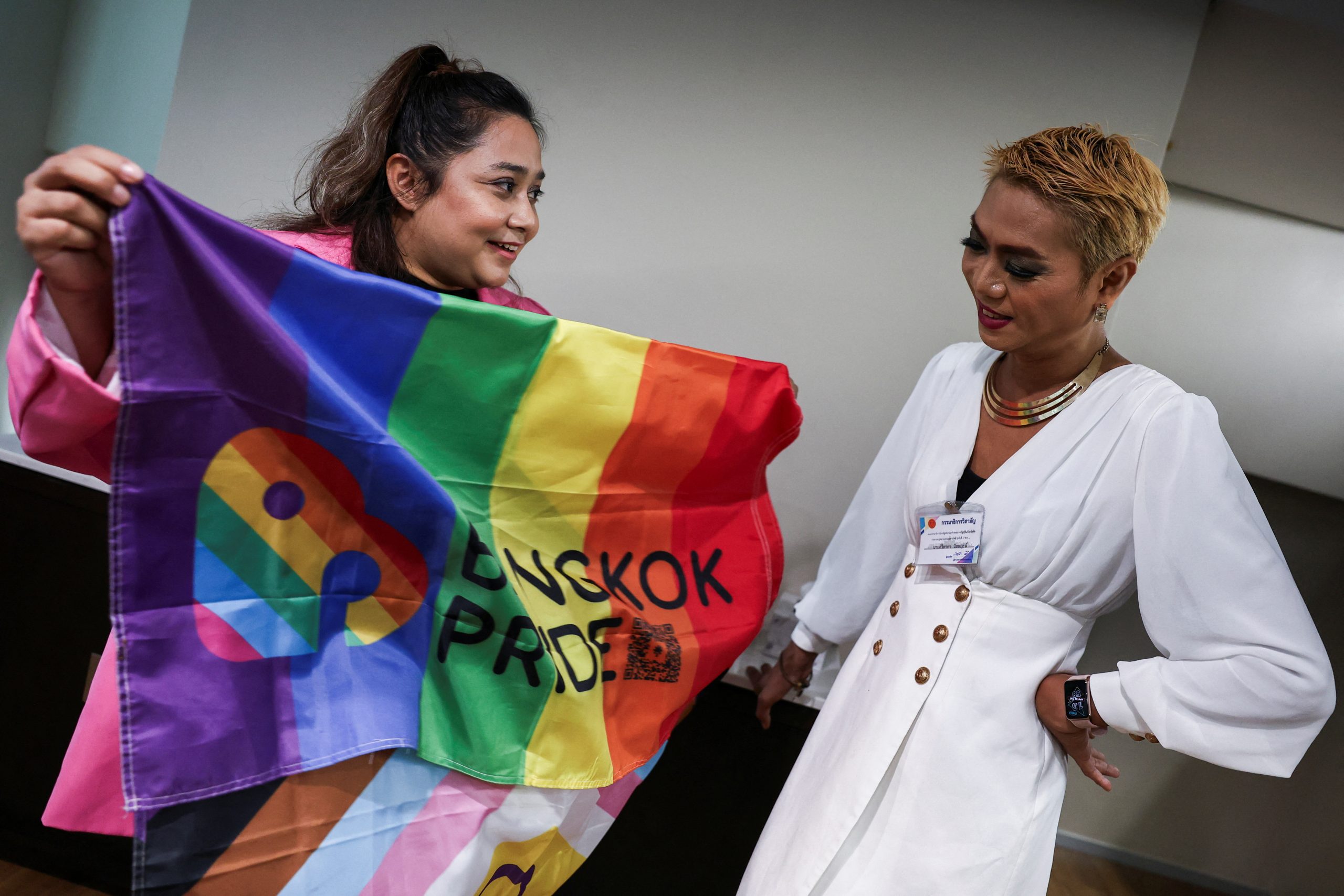
Thailand’s Senate has approved a long awaited marriage equality bill on Tuesday, making the country the third Asian country to accept same-sex couples. The Senate approved the law 130-4 with 18 abstentions.
The marriage equality bill will be sent the palace for royal clearance. The marriage equality law takes 120 days to take effect after Royal Gazette publication.
LGBTQ+ advocates welcomed the proposal a “monumental step forward” because Thailand would be the first Southeast Asian country to legalise marriage equality. Thailand is popular with travellers due to its LGBTQ+ culture and tolerance.
“This would underscore Thailand’s leadership in the region in promoting human rights and gender equality,” the Civil Society Commission of marriage equality, activists, and LGBTI+ couples said.
Prime Minister Srettha Thavisin, who wore a rainbow shirt to commemorate Pride Month, joined thousands of LGBTQ+ revellers and activists in a Bangkok parade at the start of June.
The prime minister will open Government House to commemorate the bill’s passage. Pride supporters will march from Parliament to the prime minister’s office. Mr. Srettha, who has Covid-19, will join them online after taking several days off.
Deputy Prime Minister and Commerce Minister Phumtham Wechayachai anticipates June’s Pride Month to create approximately 4.5 billion baht in economic cash flow.

Pride Month in Thailand
On Saturday, Mr. Phumtham said the government under Prime Minister Srettha Thavisin is encouraging sexual diversity and working with the commercial sector to plan more Pride Month festivities to attract LGBTQ+ tourists.
He claimed it will increase the country’s trade potential by giving SMEs business expansion chances and adding soft power value.
Mr. Phumtham claimed Poonpong Naiyanapakorn, director-general of the Trade Policy and Strategy Office, told him Pride Month celebrations will make Thailand a “pride-friendly destination” for LGBTQ+ Thai and global consumers.
This would help the country become a regional tourism hub under the government’s “Ignite Tourism Thailand” initiative to enhance tourism in 55 “worth visiting” provinces.
He added that such festivals will support downstream industries like event planners, food and beverage companies, hotels, and transport services and disperse cash to local areas. Mr. Phumtham stated Thailand’s Pride Month began in 1999. Bangkok, Chiang Mai, Phuket, and Chon Buri host parades, festivities, and campaigns.
The Tourism Authority of Thailand (TAT) expects approximately 860,000 people to attend this year’s festival and contribute at least 4.5 billion baht for the economy. LGBT Capital estimates that the world’s LGBTQ+ population has US$4.7 trillion in purchasing power and Thailand’s sexually varied population has US$26 billion.
LGBTQ+ rights in Thailand are improving, but there’s still much to do. The LGBTQ+ community in Thailand is notably strong in Bangkok and Pattaya.
Strong legal recognition allows transgender people to change their names and titles. Many LGBTQ+ couples lack legal rights since same-sex marriage is banned.
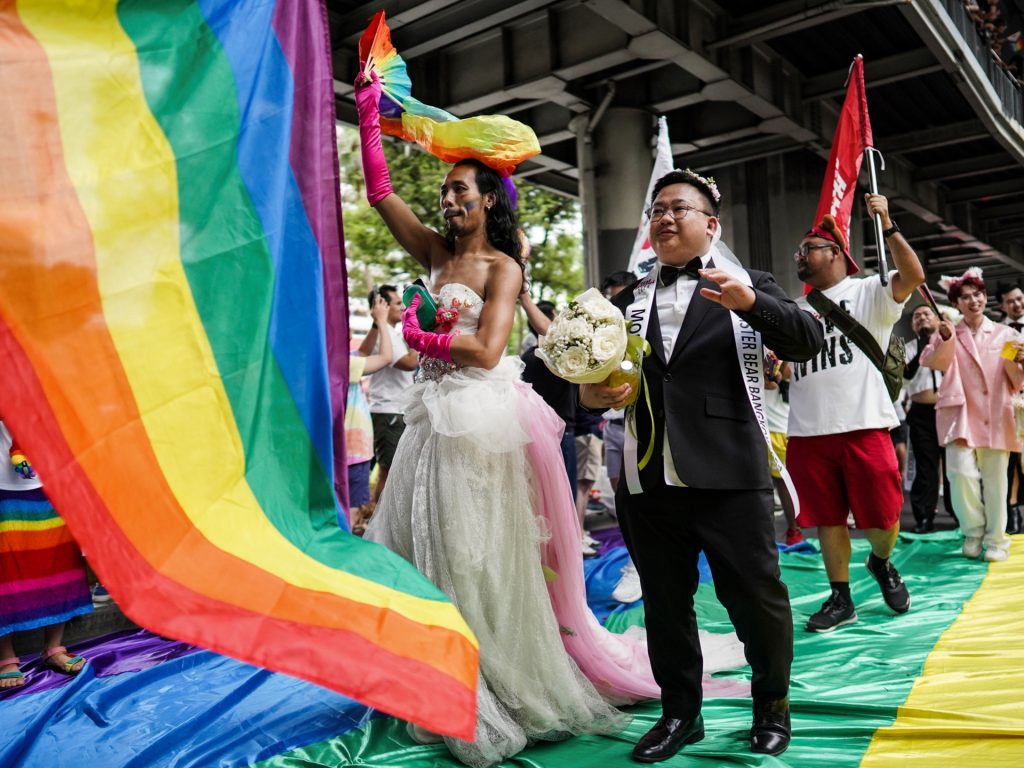
LGBTQ+ rights in Thailand
Thailand is becoming more accepting despite these difficulties. LGBTQ+ rights are gaining favour. Activists want legal changes to guarantee equality.
Pride parades are becoming increasingly visible, demonstrating diverse acceptance. While challenges remain, LGBTQ+ rights in Thailand are improving as awareness and acceptance expand.
Legal
Protecting Your Designs: Intellectual Property Rights in the Jewelry Manufacturing Industry

The jewelry manufacturing industry is a vibrant and highly competitive sector where creativity and innovation are paramount. Designers invest significant time, effort, and resources into crafting unique pieces that appeal to consumers’ tastes and preferences. However, this industry faces a persistent challenge: the protection of original designs from imitation and unauthorized use.
Intellectual property rights (IPR) play a crucial role in safeguarding jewellery designs, ensuring that creators receive recognition and financial benefits from their work. This article delves into the various forms of intellectual property rights pertinent to the jewelry manufacturing industry and offers insights on how designers can protect their creations.
Understanding Intellectual Property Rights
Intellectual property rights are legal mechanisms that grant creators exclusive rights to their inventions, designs, and artistic works. These rights encourage innovation by providing creators with the means to control the use of their creations and to benefit financially from them. In the context of jewelry design, the most relevant forms of IPR are copyrights, trademarks, patents, and design rights.
Copyrights
Copyright protection extends to original works of authorship, including artistic creations such as jewelry designs. Under copyright law, the designer of a piece of jewelry automatically acquires the exclusive right to reproduce, distribute, and display the design upon its creation. This protection does not require registration, although registering the copyright with the appropriate governmental body, such as the U.S. Copyright Office, can provide additional legal benefits and evidence of ownership.
For jewelry designers, copyright protects the aesthetic aspects of a piece, such as the specific design, patterns, and artistic expressions. However, it does not cover the functional elements or the materials used. The duration of copyright protection varies by country, but it typically lasts for the life of the creator plus an additional 50 to 70 years.
Trademarks
Trademarks protect symbols, names, logos, and slogans that distinguish goods and services in the marketplace. For jewelry manufacturers, a trademark can cover the brand name, logo, or even a unique product line name.
Registering a trademark with the appropriate authority, such as the United States Patent and Trademark Office (USPTO), provides nationwide protection and the exclusive right to use the mark in connection with the specified goods or services.
A strong trademark helps consumers identify and differentiate a brand’s products from those of competitors, fostering brand loyalty and reducing the risk of confusion in the marketplace. It also provides legal recourse against counterfeiting and unauthorised use of the brand’s identity.
Patents
Patents protect new inventions and technical innovations. In the jewelry industry, this could include innovative manufacturing processes, unique mechanisms for adjustable or interchangeable jewelry, or novel materials and techniques. A patent grants the inventor the exclusive right to use, make, and sell the invention for a limited period, usually 20 years from the filing date of the patent application.
Obtaining a patent involves a rigorous process of proving that the invention is novel, non-obvious, and useful. For jewelry designers, the primary benefit of patent protection lies in safeguarding their innovative techniques and mechanical features, which can provide a competitive edge in the market.
Design Rights
Design rights specifically protect the visual appearance of a product, including its shape, configuration, pattern, and ornamentation. These rights are particularly relevant to the jewelry industry, where the aesthetic appeal of a product is a key selling point. In many jurisdictions, design rights must be registered to be enforceable, though some countries offer unregistered design rights that provide limited protection.
Registering a design right involves submitting detailed representations of the design to the relevant authority, such as the European Union Intellectual Property Office (EUIPO) for protection within the EU. Registered design rights typically offer protection for up to 25 years, subject to renewal fees.
Steps to Protect Jewelry Designs
- Document Your Designs: Maintain detailed records of your design process, including sketches, prototypes, and finished pieces. This documentation can serve as evidence of originality and ownership in case of disputes.
- Conduct Searches: Before launching a new design, conduct thorough searches to ensure it does not infringe on existing intellectual property. This can prevent legal issues and costly disputes.
- Register Your IP: Where applicable, register your copyrights, trademarks, patents, and design rights with the appropriate authorities. Registration enhances protection and provides legal advantages in enforcing your rights.
- Use NDAs and Contracts: When working with manufacturers, suppliers, and collaborators, use non-disclosure agreements (NDAs) and detailed contracts to protect your designs and outline the terms of use. ( Check out EJ: A Jewelry Manufacturer with NDA’s.
- Monitor the Market: Regularly monitor the market for potential infringements. This can involve online searches, attending trade shows, and staying informed about competitors’ activities.
- Take Legal Action if Necessary: If you discover an infringement, take prompt legal action to enforce your rights. This may involve sending cease-and-desist letters, pursuing litigation, or seeking alternative dispute resolution methods.
Challenges and Considerations
While intellectual property rights offer significant protection, there are challenges and limitations to consider. The cost and complexity of obtaining and enforcing IPR can be prohibitive, especially for small designers and startups. Additionally, the global nature of the jewelry market means that protections obtained in one jurisdiction may not be recognized elsewhere, necessitating international strategies for comprehensive protection.
Moreover, the fast-paced nature of fashion and jewelry trends can make lengthy registration processes impractical for certain designs. In such cases, relying on unregistered design rights or focusing on brand protection through trademarks may be more viable strategies.
Conclusion
Intellectual property rights are a vital tool for protecting the creativity and innovation that drive the jewelry manufacturing industry. By understanding and strategically utilizing copyrights, trademarks, patents, and design rights, designers can safeguard their creations, enhance their competitive edge, and ensure they reap the financial rewards of their ingenuity. As the industry continues to evolve, staying informed about IPR and adapting to emerging challenges will be crucial for sustaining success in the dynamic world of jewelry design.
People Also Reading:
Law Firm Chastised for Using OpenAI ChatGPT for Legal Research
Law Firm Chastised for Using OpenAI ChatGPT for Legal Research
-

 News4 years ago
Let’s Know About Ultra High Net Worth Individual
-
Entertainment3 years ago
Mabelle Prior: The Voice of Hope, Resilience, and Diversity Inspiring Generations
-
News11 years ago
Enviromental Groups Tell Mekong Leaders Lao Dam Evaluation Process Flawed
-

 Health4 years ago
How Much Ivermectin Should You Take?
-

 Tech3 years ago
Top Forex Brokers of 2023: Reviews and Analysis for Successful Trading
-

 Lifestyles3 years ago
Aries Soulmate Signs
-

 Entertainment3 years ago
What Should I Do If Disney Plus Keeps Logging Me Out of TV?
-

 Health3 years ago
Can I Buy Ivermectin Without A Prescription in the USA?