News Asia
Inflammatory Outbursts: Recent Violence And Blasphemy Accusations In Pakistan
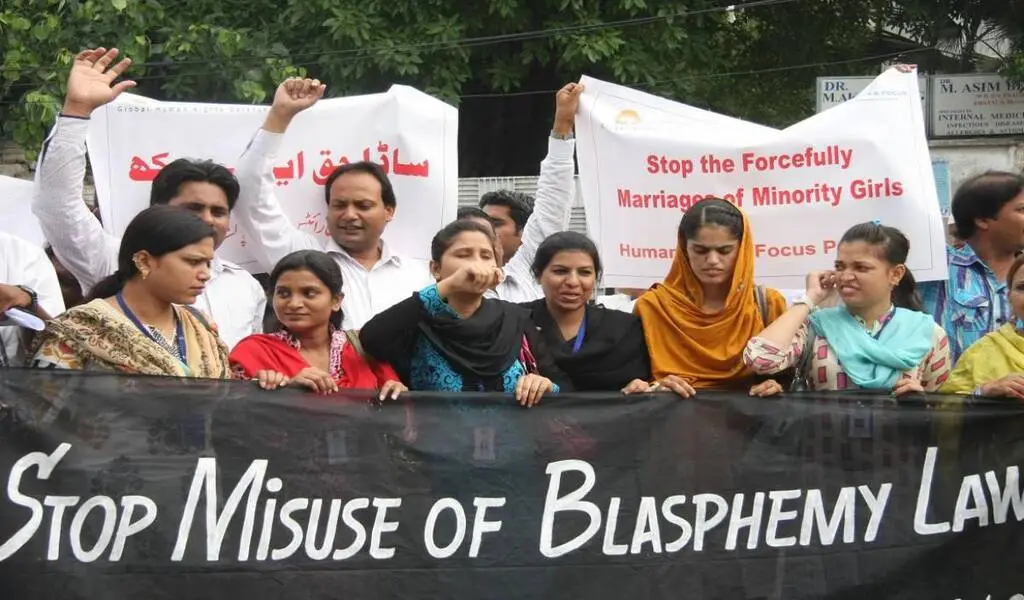
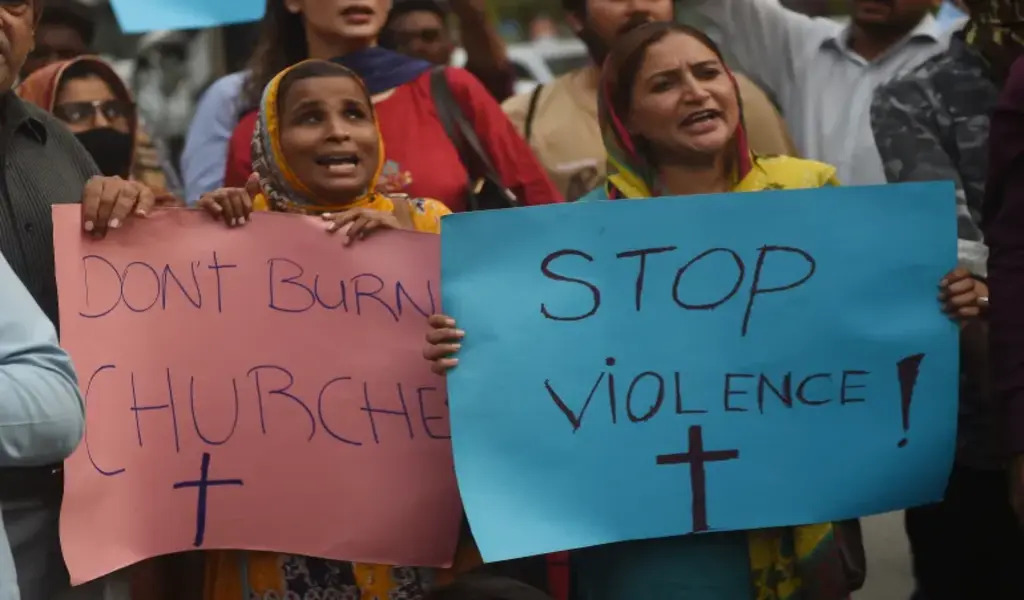
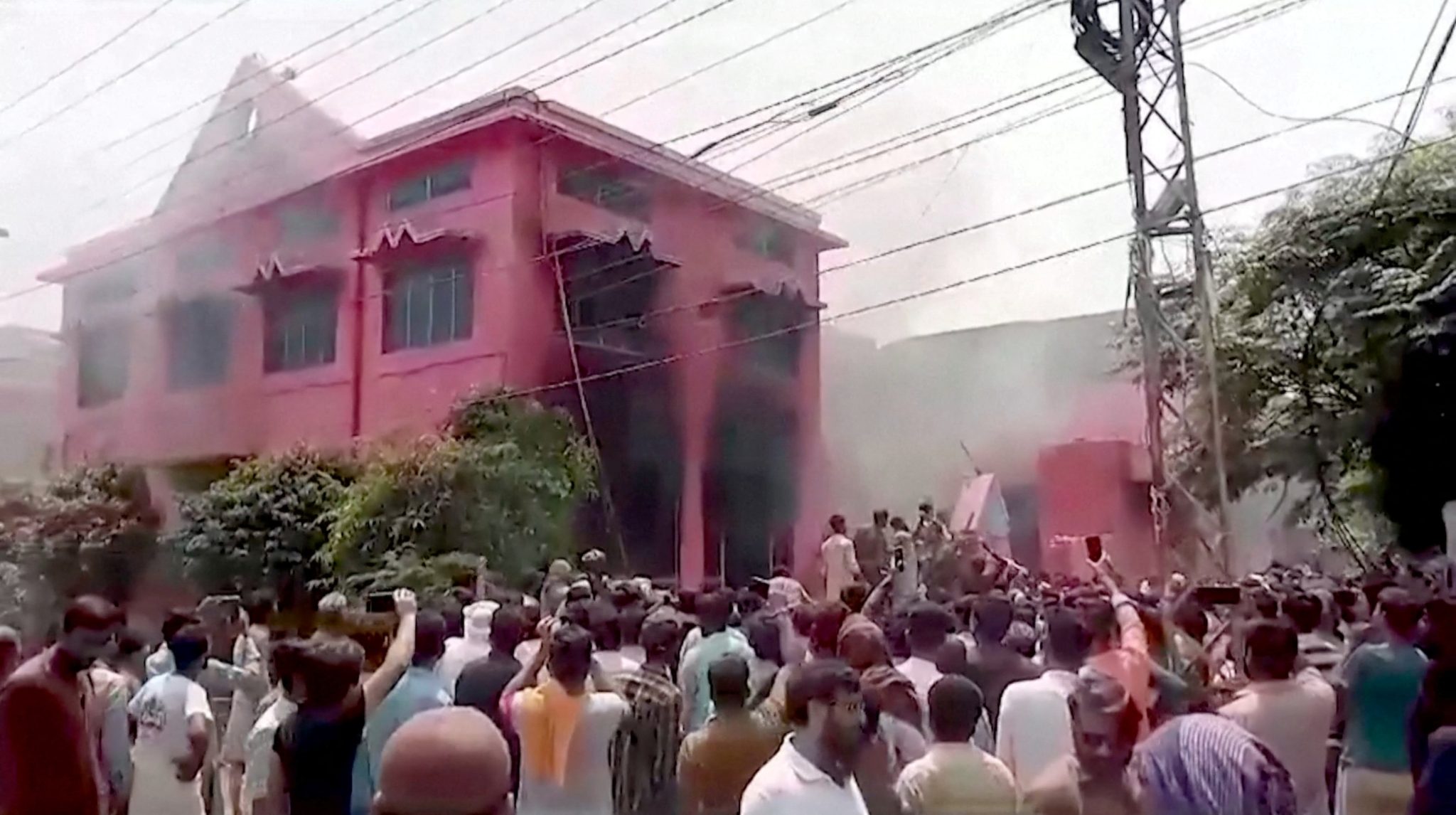
(CTN NEWS) – The glare of scrutiny once more finds itself upon Pakistan’s statute on blasphemy, as a fervent assembly of Muslims ignited flames that engulfed Christian sanctuaries and abodes in the eastern fringes of the nation in recent days.
The fervor stemmed from allegations directed at two community members, asserting their desecration of the Quran.
On the day denominated Friday, the law enforcement machinery of Pakistan apprehended two individuals from the Christian fold, who stand accused of violating the edicts of blasphemy.
In the dominion of Pakistan, where the majority adheres to the Islamic faith, such allegations carry an incendiary weight.
The merest insinuation of affront to the tenets of Islam or the venerated Prophet Muhammad can kindle a firestorm of vigilantism, wherein death oft graces the transgressors’ threshold.
The law enforcement authorities have indicated that up to this juncture, a total of 146 individuals have been apprehended in connection with the assault on the Christian community within the precincts of Jaranwala, situated in the industrial expanse of Faisalabad city on the day that corresponded to Wednesday.
Detractors assert that the statute pertaining to blasphemy often finds itself employed in a manner contrary to its intended purpose, wielded against Pakistan’s minuscule factions of minorities, and occasionally even invoked against adherents of the Islamic faith as a means to resolve personal grievances.
The Evolution of Blasphemy Laws: From Colonial Origins to Modern Advocacy
The statute of blasphemy, as delineated within the legal framework, dictates that any form of “detrimental discourse, expressions, and the like,” concerning the venerated Holy Prophet Muhammad, whether uttered verbally, inscribed in writing, depicted visually.
or conveyed through implication, allusion, or suggestion, be it direct or indirect, shall be met with the gravest of penalties, including capital punishment or a lifetime of incarceration, accompanied by the imposition of monetary fines.
This legislative construct, with certain components originating from the era of British colonial rule, lay largely dormant until the era of the 1970s.
It was during this period that it underwent fortification, a process that was integral to the broader endeavor of infusing Islamic principles into the governance structure of the state.
The epoch of the 1980s, marked by the military dictatorship of General Muhammad Zia ul-Haq, witnessed the reinvigoration of this legal mandate.
The former Prime Minister, Imran Khan, aligned himself with this legal provision and, as recently as 2021, advocated for a collective effort amongst nations with a Muslim-majority populace.
This endeavor aimed to rally these nations in an appeal to Western governments for the codification of laws that would criminalize any form of disparagement directed at the revered prophet of Islam.
To what extent is violence related to blasphemy a prevalent issue in Pakistan?
Instances of violence stemming from accusations of blasphemy are a recurrent phenomenon within the landscape of Pakistan.
While no instance of capital punishment has been executed in relation to blasphemy, the realm is marked by a prevalent occurrence of convictions tied to this charge.
Although a substantial proportion of these convictions encounter their demise upon reaching higher echelons of the judiciary, vigilant throngs, animated by a frenzied fervor, have summarily taken matters into their own hands.
This grim tableau has materialized even prior to formal court proceedings, leading to the lynching of numerous individuals.
The grim roster of victims spans a spectrum, encompassing members of religious minority groups, notable political figures, scholars, pupils, clergy, and those grappling with mental infirmities.
The modus operandi of these extrajudicial killings varies widely: immolation, hanging orchestrated by agitated crowds, summary execution within court chambers, and grisly murders enacted by the wayside, constitute but a few among the myriad ways in which these heinous acts unfold.
As documented by indigenous media outlets and researchers, a grim tally of at least 85 lives has been claimed in connection with allegations of blasphemy since the inception of the decade of the 1990s.
The judicial officials presiding over cases steeped in allegations of blasphemy have relayed accounts of relentless coercion, compelling them to decree convictions irrespective of the evidentiary foundation.
Such grim choices are often motivated by the specter of physical retribution in the event of dissent.
When the maelstrom of violence, kindled by sentiments of anti-blasphemy fervor, erupts, the local constabulary has, on occasions, chosen to adopt a passive stance, allowing marauding assemblages to enact their onslaughts unchecked.
This abdication of intervention often emanates from a chilling fear: that any intervention might confer upon them the label of “blasphemers,” subjecting them to the same brutal fate they ostensibly seek to avert.
The Aftermath of Punjab Governor’s Assassination: Blasphemy Allegations and Contemporary Realities in Pakistan
Since the year 2011, when the assassination of Punjab Governor Salmaan Taseer transpired at the hands of his personal sentinel, following his advocacy for reform within the framework of blasphemy laws, the landscape has been punctuated by a profusion of allegations rooted in blasphemy.
This event marked an inflection point beyond which the contours of mainstream discourse pertaining to this subject became exceedingly challenging to navigate.
In contemporary times, the terrain is riddled with instances where baseless assertions of blasphemy are wielded as a coercive instrument, skillfully directed at opponents enmeshed in disputes.
This stratagem, intriguingly, extends its influence even to the upper echelons of political leadership. Notably, the perpetrator behind Taseer’s demise garnered acclaim from certain quarters.
effectively signaling the emergence of the Tehreek-e-Labbaik Pakistan (TLP), a right-wing political faction that has amassed considerable sway, championing the notion of the decapitation of blasphemers.
The ascent of the TLP has precipitated a notable surge in the lodgment of blasphemy charges, propelled by ideological moorings.
Despite the proscription levied upon the group, discerning sources within the government and the populace assert that certain members have been implicated in the recent wave of violence. In response, the TLP vehemently rebuts the accusations leveled against it.
As the year 2023 unfolds, a disquieting tableau emerges, with no fewer than 53 individuals incarcerated across the expanse of Pakistan, ensnared within the tentacles of blasphemy charges, as attested by the United States Commission on International Religious Freedom.
Paradox and Peril: Blasphemy Accusations and Religious Minorities in Pakistan
A prevailing trend within Pakistan’s tapestry of blasphemy accusations manifests a paradox, wherein a majority of those ensnared within this intricate web are of the Islamic faith themselves.
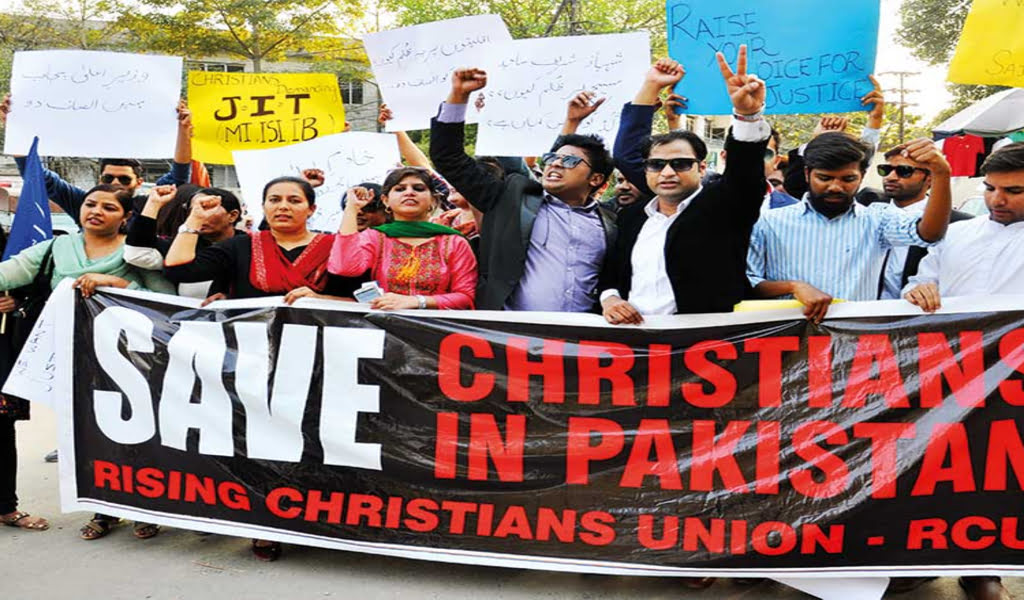
However, this paradox is tinged with a pronounced poignancy, as it is the members of religious minorities who confront a particularly ominous and acute peril, as underscored by human rights advocacy groups.
Within this labyrinth of blasphemy allegations, Christians—constituting a slender fraction, approximately 1.3 percent, of Pakistan’s vast populace of 250 million—find themselves perilously exposed.
Regions spanning the urban landscapes of Lahore, Gojra, Jaranwala, and the national capital Islamabad have borne witness to the conflagration of neighborhoods, razed to the ground or subjected to brutal attacks in the aftermath of allegations tied to blasphemy.
Recent years have witnessed these ominous occurrences, casting an unrelenting pall of danger over these communities.
The cornerstone upon which convictions pivot rests upon the edifice of witness testimonies. Yet, the foundations of these testimonials frequently intertwine with the tendrils of personal vendettas.
Activists advocating for justice underscore that this intricate interplay underscores the frailty of the legal framework, which is often wielded to settle personal scores, rather than to administer fair and unbiased justice.
RELATED CTN NEWS:
PIA’s CBA Union Initiates Symbolic Strike With Temporary Closure Of Booking Offices In Pakistan
China’s Fertility Rate Plummets To Unprecedented Lows: Fertility Landscape And Remedial Measures
76th Independence Day: Why Pakistan Celebrates Independence Day On August 14?

News Asia
Bangladesh Supreme Court to Rule on Controversial Job Quotas Amid Nationwide protests
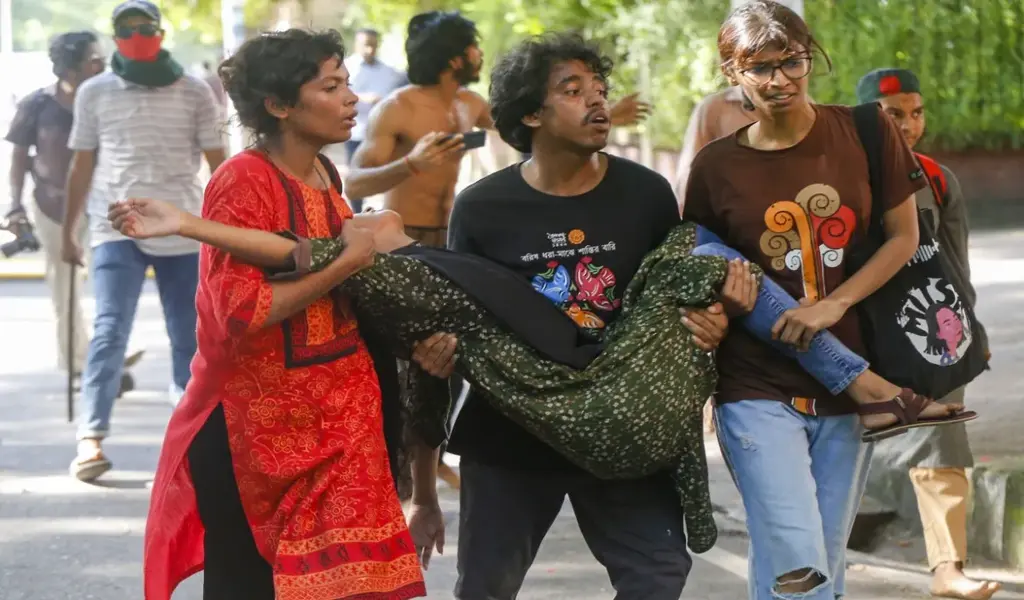
(CTN News) – The future of public service hiring regulations, which have provoked national conflicts between police and university students that have resulted in at least 133 fatalities so far, is set to be decided by Bangladesh’s Supreme Court on Sunday, or today.
Later in the day, the nation’s highest court will meet to declare its decision about the controversial job quotas—either in favor of or against their elimination.
This week’s protests over politically motivated admission quotas for highly sought-after government posts turned into some of the worst instability during Prime Minister Sheikh Hasina’s watch.
Due to the ongoing turmoil, a curfew has been in place since Friday. In addition, the government has declared a two-day holiday during which all offices and institutions would be closed.
After riot police were unable to restore order, soldiers are now policing cities throughout Bangladesh, and since Thursday, there has been a statewide internet blackout that has severely limited the flow of information to the outside world.
SEE ALSO: Nearly 1,000 Indian Students Return from Bangladesh Amid Deadly Unrest Over Job Quota System
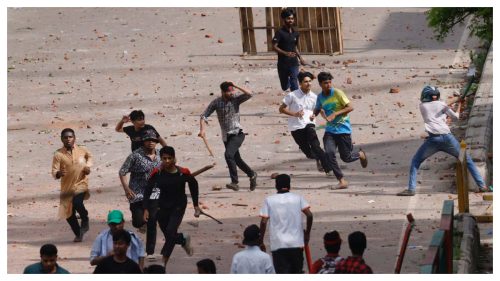
Hasina made hints to the public this week that the plan will be abandoned, which comes after her opponents accuse her government of using the judiciary to further its own agenda.
However, a positive decision is unlikely to calm the nation’s simmering rage in the wake of the intensifying crackdown and growing dead toll.
Business owner Hasibul Sheikh, 24, told AFP, “It’s not about the rights of the students anymore,” while observing a Saturday street demonstration in the capital city of Dhaka against a statewide curfew.
“Our demand is one point now, and that’s the resignation of the government,” he stated.
A system that reserves more than half of civil service positions for particular groups, like as children of veterans of the 1971 war, is the driving force behind the upheaval this month.
Hasina, 76, has ruled the nation since 2009 and won her fourth consecutive election in January following a ballot in which there was no real competition, according to critics who claim the program helps families who support her.
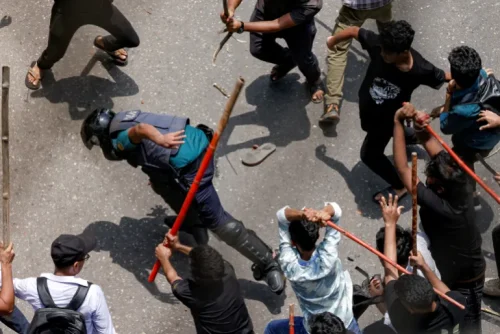
Rights organizations accuse Hasina’s government of abusing state institutions, including as the extrajudicial assassination of opposition activists, in order to strengthen its grasp on power and quell dissent.
Bangladesh’s 170 million people lack access to sufficient employment possibilities, therefore the quota system is a major cause of anger for recent graduates who are struggling to find work.
“The government’s actions have made the situation worse, rather than trying to address the protesters’ grievances,” Pierre Prakash, Asia director of Crisis Group, told AFP.
After a week of increasing violence, Hasina canceled her intentions to depart the nation on Sunday for a diplomatic trip to Spain and Brazil.
Source: The Indian Express
News Asia
Pakistani Government Plans to Ban PTI
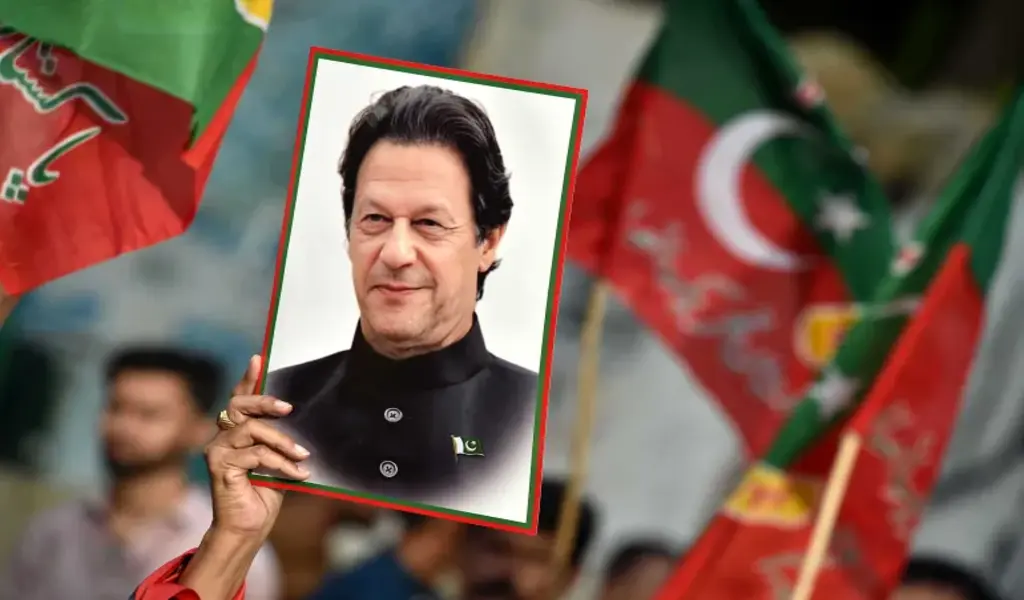
(CTN News) – The Pakistani government has announced measures to outlaw Pakistan Terheek-e-Insaf (PTI), the party of imprisoned former Prime Minister Imran Khan.
Information Minister Attaullah Tarar made the declaration on Monday, only days after the Supreme Court declared the PTI eligible for a share of reserved seats in national and provincial assemblies.
After reviewing all relevant information, the government has decided to ban PTI. “We will file a case to ban the party,” he said, citing claims such as inciting violent protests last year and leaking confidential information.
Tarar stated that the case would be moved to the Supreme Court.
He also stated that the government intended to file treason charges against Khan and two other senior party leaders, former President of Pakistan Arif Alvi and ex-Deputy Speaker of the National Assembly Qasim Suri, as well as a review appeal against the Supreme Court’s ruling that the PTI should be allocated some assembly seats reserved for women and members of religious minorities.
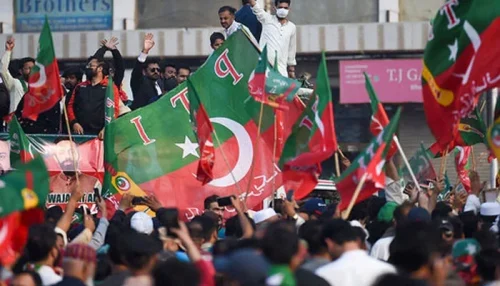
According to Sayed Zulfiqar Bukhari, a top PTI politician and party spokesperson, the government’s action “betrays their complete panic”.
“After realizing that they could no longer threaten, compel, or blackmail judges, they decided to make this move through the cabinet. “All of their attempts to stop us have been declared illegal by the courts,” he stated.
Last week, the Supreme Court recognized the PTI as a political party and confirmed that the party’s lack of an electoral emblem did not affect its legal right to field candidates.
The verdict was in response to the PTI being barred from competing in parliamentary elections in February using its party emblem, the cricket bat, forcing it to field candidates as independents.
Despite the setback, PTI-backed candidates emerged as the largest parliamentary bloc, winning 93 seats.
After Khan declined to cooperate with his political opponents, the Pakistan Muslim League-Nawaz (PMLN) and Pakistan People’s Party (PPP) formed a coalition government with other smaller parties.
Ex-Governor Sindh Zubair, who formerly served in the PMLN, stated that the government’s action was in response to the Supreme Court’s ruling last week and warned of political upheaval ahead.
“The powers that be are trying to disenfranchise the largest majority of voters of the country, who voted for PTI,” he disclosed to Al Jazeera.
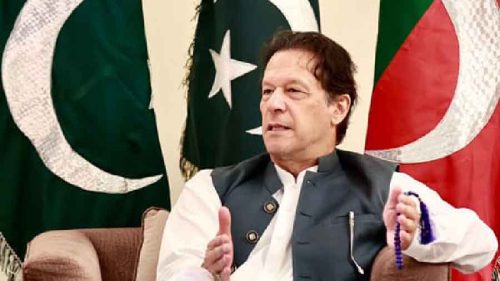
Khan was appointed prime minister in August 2018 but was dismissed from power in April 2022 after a parliamentary vote of no-confidence.
The cricketer-turned-politician has since faced a slew of legal issues, including charges of misplacing and leaking the contents of a confidential cable delivered to Islamabad by Pakistan’s then-ambassador in the US in 2022.
Khan has continually disputed the charge, claiming that the dossier contained evidence that his resignation as prime minister was orchestrated by his political opponents and the country’s powerful military, with assistance from the US administration. Both Washington and Pakistan’s army deny the accusation.
Despite multiple recent court verdicts in his favor, Khan has been in prison since August of last year.
Source: Aljazeera
News Asia
NAB Re-Arrests Imran Khan and Bushra Bibi After Iddat Case Conviction Overturned
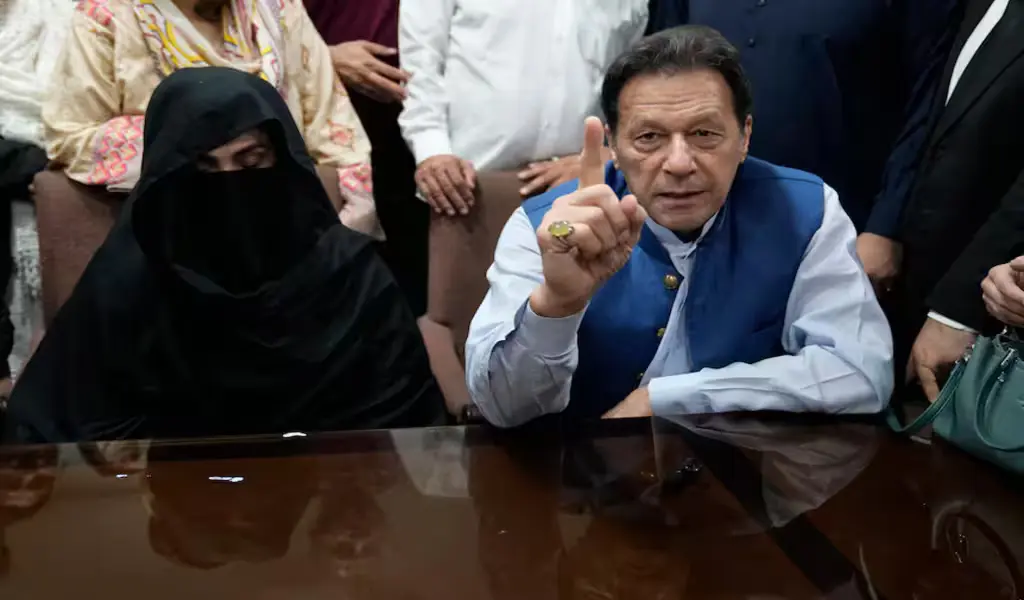
(CTN News) – Former Prime Minister Imran Khan and his wife, Bushra Bibi, were acquitted in the Iddat case by a sessions court on Saturday, less than 24 hours after the Supreme Court ruled in favor of the PTI in reserved seats.
However, their relief was short-lived when Imran Khan was detained by the National Accountability Bureau (NAB) for selling official goods. Bushra Bibi was also rearrested in this case while being released from Adiala Jail’s Gate No. 3.
According to sources, the NAB detained Bushra Bibi after the bureau’s chairman issued arrest warrants for her and Imran Khan. Both are to be investigated in Adiala Jail.
Opposition leader Omar Ayub Khan condemned Bushra Bibi’s imprisonment and criticized the Adiala Jail administration. He also cautioned the jail superintendent of the repercussions and announced that a privilege motion would be filed against him.
Imran Khan and Bushra Bibi were acquitted in the Iddat case after Additional District and Sessions Judge (ADSJ) Mohammad Afzal Majoka reversed their previous verdict, which sentenced them to seven years in prison on February 3, five days before the general election.
Imran Khan’s lawyers, Usman Gill and Zaheer Abbas, were in court when the verdict was pronounced.
In the 28-page ruling, Judge Majoka rejected Khawar Fareed Maneka, Bushra Bibi’s ex-husband,’s arguments that Imran Khan and Bushra Bibi’s nikah was illegally performed and that Mr. Maneka was denied Buju (reconciliation rights) under religious law.
The court also rejected the allegation of fornication under provision 496-B of the Pakistan Penal Code (PPC), stating that no charge was filed under this provision against both Imran Khan and his spouse “because there was no evidence of a second witness”. The trial court heard only one witness, Mr Maneka’s domestic servant.
“In these circumstances, it cannot be said that the appellants committed fornication,” the judge wrote. Regarding the charge of contracting marriage fraudulently during the Iddat period, the judge found that in a video given as evidence during the trial, Mr. Maneka lauded his ex-wife, Bushra Bibi, and “deposed that his ex-wife is a pious lady.”
The magistrate inquired about “how this witness [Mr Maneka] can claim that the appellant No. 2 [Bushra Bibi] committed fraud with him” .
The court announced its decision: “From a perusal of Section 496 PPC and the above-mentioned esteemed citations, this court is of the view that the appellants have not gone through any marriage ceremony fraudulently or with dishonest intention because none of the parties claimed that nikah was not performed and fraudulently he or she was supposed to believe that marriage ceremony was solemnised.”
The court judgment added: “In the instant instance, it is the complainant’s case that the appellants’ nikah was done on January 1, 2018, followed by the second nikah in February 2018. By no stretch of the imagination, it was a marriage with dishonest or deceptive intentions.”
Regarding Mr. Maneka’s claim that he was denied reconciliation rights and so deceived by Imran Khan and Ms. Bibi, the court noted that during cross-examination, Mr. Maneka stated that he learned of the appellants’ marriage on the second day of their nikah.
Before submitting the complaint, the judge questioned why Mr Maneka had been silent on his reconciliation rights for six years.
The judge stated, “The complainant has failed to prove his case against the appellants.” As a result, both appeals filed by appellants No. 1 [Imran Khan] and No. 2 [Bushra Bibi] are accepted, the judgment of the learned trial court of February 3, 2024, is overturned, and both appellants are acquitted of the accusation.”
The court ordered their freedom unless they needed to be imprisoned in other cases.
Source: DAWN
-

 News4 years ago
Let’s Know About Ultra High Net Worth Individual
-
Entertainment2 years ago
Mabelle Prior: The Voice of Hope, Resilience, and Diversity Inspiring Generations
-
News11 years ago
Enviromental Groups Tell Mekong Leaders Lao Dam Evaluation Process Flawed
-

 Health4 years ago
How Much Ivermectin Should You Take?
-

 Tech3 years ago
Top Forex Brokers of 2023: Reviews and Analysis for Successful Trading
-

 Lifestyles3 years ago
Aries Soulmate Signs
-

 Entertainment3 years ago
What Should I Do If Disney Plus Keeps Logging Me Out of TV?
-

 Health3 years ago
Can I Buy Ivermectin Without A Prescription in the USA?