News
Omicron Variant May Prolong Online Learning for Students
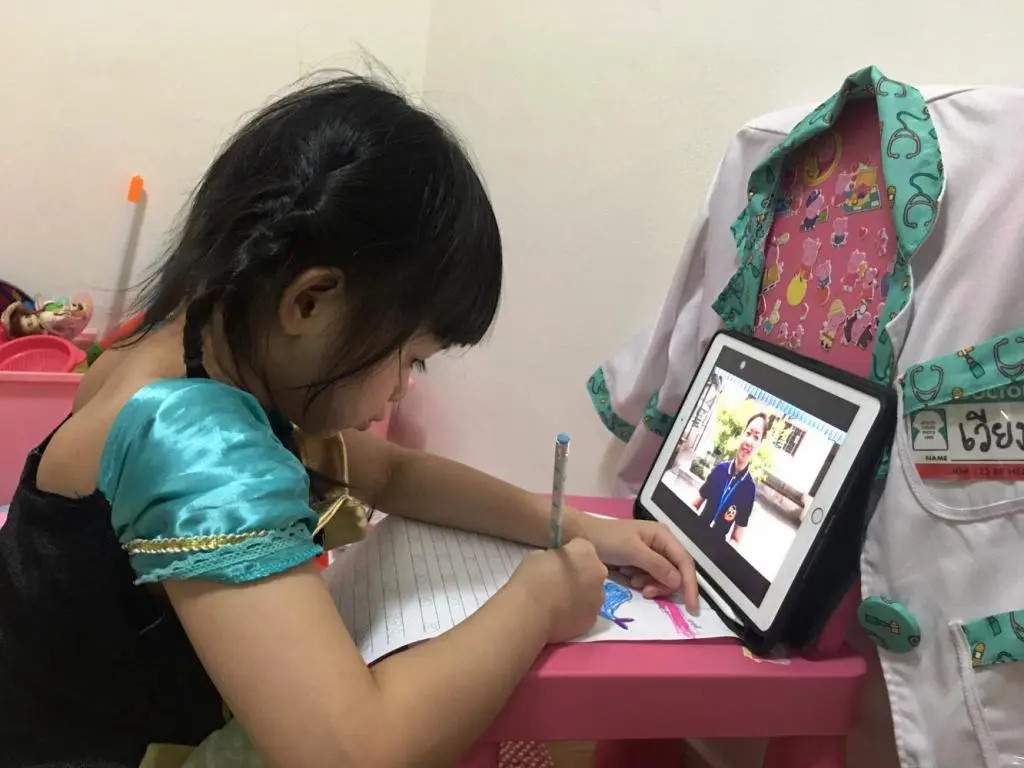
As a response to a new wave of Coronavirus infections caused by the Omicron variant, Education Minister Trinuch Thienthong has announced a work from home policy until January 14. Since the pandemic began two years ago schools have alternated between on-site and online learning classes.
Many parents would rather not see schools closed, while teachers prefer in-person instruction and may not go-to online learning unless they are told to by the Education Ministry.
Over 12,000 schools across Thailand are free to decide whether to resume on-site learning or continue with online learning.
Nevertheless, according to her, these schools are required to strictly comply with the Covid-19 measures known as the Sandbox Safety Zone, which includes social distancing, wearing masks at all times, and conducting antigen testing on students, teachers, and staff.
Approximately 6.5 million vaccine shots have been administered to students between the ages of 12 and 18. The government will begin offering vaccines to children aged 5-11 next month.
Omicron Variant can be controlled
International Schools Association of Thailand (ISAT) and International School Bangkok (ISB) president Usa Somboon explained that the Omicron variant puts no additional pressure on prevention measures at international schools.
After reopening their doors in early November, international schools were strictly monitoring for positive Covid cases. According to Usa, schools will follow the government’s Covid-19 prevention measures.
“We have learned that face-to-face teaching and learning are invaluable and are far preferred over online learning. The campus will, however, adhere to government restrictions, such as campus closures, she added.
Online learning is much better than it was in 2020, but it is not the recommended medium for instruction, Ms Usa said. Online learning did not work for all students in the last two rounds of closure.
She said that after the school reopened in October, teachers took some time to get students’ skills and participation up to school standards.
The ISAT president anticipates another year of on and off-campus education this year, but schools still prefer on-campus instruction.
Optimal learning occurs in the classroom
Educators, parents, and students all agree that optimal learning occurs in the classroom, not at home, which is why we remain committed to keeping our schools open.
According to her, “the Omicron variant appears to be spreading more quickly, but we are confident that international schools will be able to remain open into term two thanks to our existing Covid-19 protection.”
The past two years have seen schools adopt new technologies for online learning.
While some colleges have implemented interactive classes or incorporated virtual reality or 3D technologies in their classes, others have taken longer to catch up, leaving many students without the tools to take online courses. Some have even dropped out.
Due to this, the Education Ministry has announced a policy to bring those students back as well as introducing additional programmes to attract underprivileged students into formal education.
More aide for remote area schools
Education is one of the most important tools that students can use to shape their future. More opportunities will be made available to them,” said Ms Trinuch.
As part of this project, the Office of the Basic Education Commission will work with the Office of Non-Formal and Informal Education and the Office of the Vocational Education Commission.
As a result, 46,400 students living in remote areas will receive education tools, toys, sports equipment, food, and other necessities through the Office of Non-Formal and Informal Education.
In addition, the Office of Vocational Education Commission will offer 5,000 students three-year scholarships.
Furthermore, the ministry plans to open Career & Entrepreneurship Centers (CEC) in every province so as to enhance skills for at least 500,000 people to boost their chances of finding a job.
Online learning and face-to-face method teaching
During the pandemic, many students were affected by school closures, but homeschoolers’ impacts were less severe, said Assoc Prof Dr Adisak Plitponkarnpim, director of Mahidol University’s National Institute for Child and Family Development (NICFD).
According to him, policymakers should encourage home-based education and support a hybrid learning approach that combines online and face-to-face methods.
The NICFD, for instance, has facilities for homeschoolers to participate in on-site classes in language, science, and mathematics to take advantage of the facilities available in schools.
Additionally, the NICFD offers activity-based learning programmes to enhance students’ skills. Students can study at home while using our facilities to develop their skills in the meantime.
He said, “This is the format education of the future should take, whether we face another pandemic or something else.” Furthermore, Dr Adisak said the educational system should emphasize nature-based education.
Preschoolers aged 1–6 years old are especially in need of this approach.
NICFD has been implementing this approach since last year. Its programme allows young children to spend most of their time outside of the classroom learning.
“Many of the problems we are currently facing are the result of the imbalance caused by humans in nature. We need to teach our children to immerse themselves in nature.”
Source: Bangkok Post

News
Google’s Search Dominance Is Unwinding, But Still Accounting 48% Search Revenue
Google is so closely associated with its key product that its name is a verb that signifies “search.” However, Google’s dominance in that sector is dwindling.
According to eMarketer, Google will lose control of the US search industry for the first time in decades next year.
Google will remain the dominant search player, accounting for 48% of American search advertising revenue. And, remarkably, Google is still increasing its sales in the field, despite being the dominating player in search since the early days of the George W. Bush administration. However, Amazon is growing at a quicker rate.
Google’s Search Dominance Is Unwinding
Amazon will hold over a quarter of US search ad dollars next year, rising to 27% by 2026, while Google will fall even more, according to eMarketer.
The Wall Street Journal was first to report on the forecast.
Lest you think you’ll have to switch to Bing or Yahoo, this isn’t the end of Google or anything really near.
Google is the fourth-most valued public firm in the world. Its market worth is $2.1 trillion, trailing just Apple, Microsoft, and the AI chip darling Nvidia. It also maintains its dominance in other industries, such as display advertisements, where it dominates alongside Facebook’s parent firm Meta, and video ads on YouTube.
To put those “other” firms in context, each is worth more than Delta Air Lines’ total market value. So, yeah, Google is not going anywhere.
Nonetheless, Google faces numerous dangers to its operations, particularly from antitrust regulators.
On Monday, a federal judge in San Francisco ruled that Google must open up its Google Play Store to competitors, dealing a significant blow to the firm in its long-running battle with Fortnite creator Epic Games. Google announced that it would appeal the verdict.
In August, a federal judge ruled that Google has an illegal monopoly on search. That verdict could lead to the dissolution of the company’s search operation. Another antitrust lawsuit filed last month accuses Google of abusing its dominance in the online advertising business.
Meanwhile, European regulators have compelled Google to follow tough new standards, which have resulted in multiple $1 billion-plus fines.

Pixa Bay
Google’s Search Dominance Is Unwinding
On top of that, the marketplace is becoming more difficult on its own.
TikTok, the fastest-growing social network, is expanding into the search market. And Amazon has accomplished something few other digital titans have done to date: it has established a habit.
When you want to buy anything, you usually go to Amazon, not Google. Amazon then buys adverts to push companies’ products to the top of your search results, increasing sales and earning Amazon a greater portion of the revenue. According to eMarketer, it is expected to generate $27.8 billion in search revenue in the United States next year, trailing only Google’s $62.9 billion total.
And then there’s AI, the technology that (supposedly) will change everything.
Why search in stilted language for “kendall jenner why bad bunny breakup” or “police moving violation driver rights no stop sign” when you can just ask OpenAI’s ChatGPT, “What’s going on with Kendall Jenner and Bad Bunny?” in “I need help fighting a moving violation involving a stop sign that wasn’t visible.” Google is working on exactly this technology with its Gemini product, but its success is far from guaranteed, especially with Apple collaborating with OpenAI and other businesses rapidly joining the market.
A Google spokeswoman referred to a blog post from last week in which the company unveiled ads in its AI overviews (the AI-generated text that appears at the top of search results). It’s Google’s way of expressing its ability to profit on a changing marketplace while retaining its business, even as its consumers steadily transition to ask-and-answer AI and away from search.

Google has long used a single catchphrase to defend itself against opponents who claim it is a monopoly abusing its power: competition is only a click away. Until recently, that seemed comically obtuse. Really? We are going to switch to Bing? Or Duck Duck Go? Give me a break.
But today, it feels more like reality.
Google is in no danger of disappearing. However, every highly dominating company faces some type of reckoning over time. GE, a Dow mainstay for more than a century, was broken up last year and is now a shell of its previous dominance. Sears declared bankruptcy in 2022 and is virtually out of business. US Steel, long the foundation of American manufacturing, is attempting to sell itself to a Japanese corporation.
SOURCE | CNN
News
2024 | Supreme Court Won’t Hear Appeal From Elon Musk’s X Platform Over Warrant In Trump Case
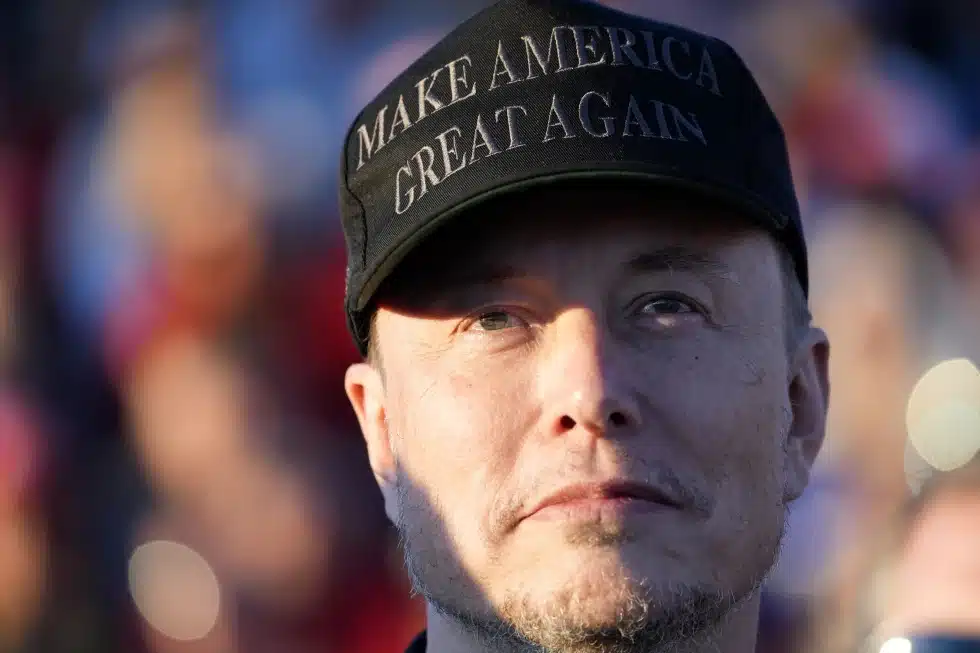
Washington — Trump Media, The Supreme Court announced Monday that it will not hear an appeal from social media platform X about a search warrant acquired by prosecutors in the election meddling case against former President Donald Trump.
The justices did not explain their rationale, and there were no recorded dissents.
The firm, which was known as Twitter before being purchased by billionaire Elon Musk, claims a nondisclosure order that prevented it from informing Trump about the warrant obtained by special counsel Jack Smith’s team violated its First Amendment rights.
The business also claims Trump should have had an opportunity to exercise executive privilege. If not reined in, the government may employ similar tactics to intercept additional privileged communications, their lawyers contended.

Supreme Court Won’t Hear Appeal From Elon Musk’s X Platform Over Warrant In Trump Case
Two neutral electronic privacy groups also joined in, urging the high court to hear the case on First Amendment grounds.
Prosecutors, however, claim that the corporation never shown that Trump utilized the account for official purposes, therefore executive privilege is not a problem. A lower court also determined that informing Trump could have compromised the current probe.

Trump utilized his Twitter account in the weeks preceding up to his supporters’ attack on the Capitol on January 6, 2021, to spread false assertions about the election, which prosecutors claim were intended to create doubt in the democratic process.
The indictment describes how Trump used his Twitter account to encourage his followers to travel to Washington on Jan. 6, pressuring Vice President Mike Pence to reject the certification, and falsely claiming that the Capitol crowd, which battered police officers and destroyed glass, was peaceful.

Supreme Court Won’t Hear Appeal From Elon Musk’s X Platform Over Warrant In Trump Case
That case is now moving forward following the Supreme Court’s verdict in July, which granted Trump full immunity from criminal prosecution as a former president.
The warrant arrived at Twitter amid quick changes implemented by Musk, who bought the company in 2022 and has since cut off most of its workforce, including those dedicated to combating disinformation and hate speech.
SOURCE | AP
News
The Supreme Court Turns Down Biden’s Government Appeal in a Texas Emergency Abortion Matter.
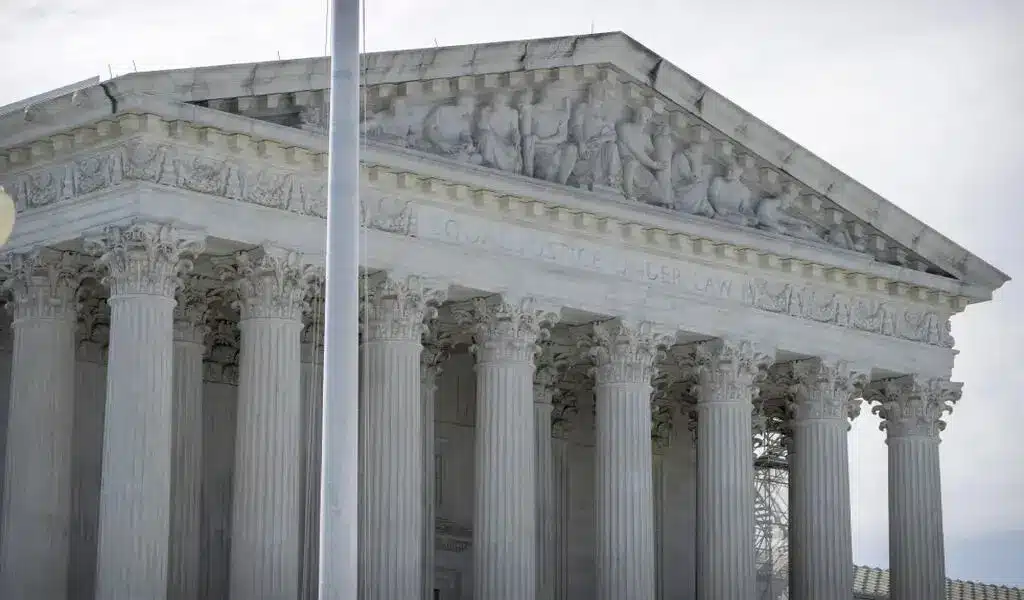
(VOR News) – A ruling that prohibits emergency abortions that contravene the Supreme Court law in the state of Texas, which has one of the most stringent abortion restrictions in the country, has been upheld by the Supreme Court of the United States. The United States Supreme Court upheld this decision.
The justices did not provide any specifics regarding the underlying reasons for their decision to uphold an order from a lower court that declared hospitals cannot be legally obligated to administer abortions if doing so would violate the law in the state of Texas.
Institutions are not required to perform abortions, as stipulated in the decree. The common populace did not investigate any opposing viewpoints. The decision was made just weeks before a presidential election that brought abortion to the forefront of the political agenda.
This decision follows the 2022 Supreme Court ruling that ended abortion nationwide.
In response to a request from the administration of Vice President Joe Biden to overturn the lower court’s decision, the justices expressed their disapproval.
The government contends that hospitals are obligated to perform abortions in compliance with federal legislation when the health or life of an expectant patient is in an exceedingly precarious condition.
This is the case in regions where the procedure is prohibited. The difficulty hospitals in Texas and other states are experiencing in determining whether or not routine care could be in violation of stringent state laws that prohibit abortion has resulted in an increase in the number of complaints concerning pregnant women who are experiencing medical distress being turned away from emergency rooms.
The administration cited the Supreme Court’s ruling in a case that bore a striking resemblance to the one that was presented to it in Idaho at the beginning of the year. The justices took a limited decision in that case to allow the continuation of emergency abortions without interruption while a lawsuit was still being heard.
In contrast, Texas has been a vocal proponent of the injunction’s continued enforcement. Texas has argued that its circumstances are distinct from those of Idaho, as the state does have an exemption for situations that pose a significant hazard to the health of an expectant patient.
According to the state, the discrepancy is the result of this exemption. The state of Idaho had a provision that safeguarded a woman’s life when the issue was first broached; however, it did not include protection for her health.
Certified medical practitioners are not obligated to wait until a woman’s life is in imminent peril before they are legally permitted to perform an abortion, as determined by the state supreme court.
The state of Texas highlighted this to the Supreme Court.
Nevertheless, medical professionals have criticized the Texas statute as being perilously ambiguous, and a medical board has declined to provide a list of all the disorders that are eligible for an exception. Furthermore, the statute has been criticized for its hazardous ambiguity.
For an extended period, termination of pregnancies has been a standard procedure in medical treatment for individuals who have been experiencing significant issues. It is implemented in this manner to prevent catastrophic outcomes, such as sepsis, organ failure, and other severe scenarios.
Nevertheless, medical professionals and hospitals in Texas and other states with strict abortion laws have noted that it is uncertain whether or not these terminations could be in violation of abortion prohibitions that include the possibility of a prison sentence. This is the case in regions where abortion prohibitions are exceedingly restrictive.
Following the Supreme Court’s decision to overturn Roe v. Wade, which resulted in restrictions on the rights of women to have abortions in several Republican-ruled states, the Texas case was revisited in 2022.
As per the orders that were disclosed by the administration of Vice President Joe Biden, hospitals are still required to provide abortions in cases that are classified as dire emergency.
As stipulated in a piece of health care legislation, the majority of hospitals are obligated to provide medical assistance to patients who are experiencing medical distress. This is in accordance with the law.
The state of Texas maintained that hospitals should not be obligated to provide abortions throughout the litigation, as doing so would violate the state’s constitutional prohibition on abortions. In its January judgment, the 5th United States Circuit Court of Appeals concurred with the state and acknowledged that the administration had exceeded its authority.
SOURCE: AP
SEE ALSO:
Could Last-Minute Surprises Derail Kamala Harris’ Campaign? “Nostradamus” Explains the US Poll.
-

 News4 years ago
Let’s Know About Ultra High Net Worth Individual
-
Entertainment2 years ago
Mabelle Prior: The Voice of Hope, Resilience, and Diversity Inspiring Generations
-
News11 years ago
Enviromental Groups Tell Mekong Leaders Lao Dam Evaluation Process Flawed
-

 Health4 years ago
How Much Ivermectin Should You Take?
-

 Tech3 years ago
Top Forex Brokers of 2023: Reviews and Analysis for Successful Trading
-
 Lifestyles3 years ago
Aries Soulmate Signs
-

 Entertainment3 years ago
What Should I Do If Disney Plus Keeps Logging Me Out of TV?
-

 Health3 years ago
Can I Buy Ivermectin Without A Prescription in the USA?