News
What Is The Identity And Significance Of The BA.2.86 Variant In Relation To The Global COVID-19 Situation?

(CTN NEWS) – Scientists are in a race to determine whether a highly mutated coronavirus variant, which has emerged on three continents, will pose a significant global threat or turn out to be much less concerning than anticipated.
The variant, designated as BA.2.86, was identified by multiple laboratories last week. While this lineage appears to be extremely uncommon, it stands out due to its substantial differences from other currently circulating variants.
Notably, it carries numerous alterations to its spike protein, a critical target for the body’s immune response against the SARS-CoV-2 virus.
For many researchers, the appearance of BA.2.86 brings back memories of the early stages of the Omicron variant in late 2021. During that time, scientists in southern Africa noticed a distinct lineage that swiftly gained global attention.
“There’s a sense of déjà vu here,” remarks Adam Lauring, a virologist and infectious-disease expert from the University of Michigan in Ann Arbor. His research group identified an individual infected with the BA.2.86 variant.
The progression of successive COVID-19 waves and the ongoing distribution of booster vaccines have resulted in a higher and more widespread global immunity to SARS-CoV-2.
Consequently, most experts do not anticipate BA.2.86 to have the same magnitude of impact as the Omicron wave experienced previously.
Nonetheless, Lauring emphasizes that it’s still early to draw definitive conclusions. “While there are valid reasons to believe that the impact won’t mirror the Omicron wave, it’s important to exercise caution in these initial stages,” he adds.
Nature examines the current knowledge surrounding the BA.2.86 variant and the critical inquiries that scientists aim to address.
BA.2.86 Variant: Emerging Cases and Genetic Changes
As of August 21st, the variant had been associated with six cases across four countries: Israel, Denmark, the United Kingdom, and the United States. The World Health Organization in Geneva, Switzerland, has classified BA.2.86 as a monitored variant.
“There will almost certainly be additional cases that will begin to surface,” commented Lauring.
The lineage appears to be descended from an Omicron subvariant known as BA.2, which led to significant increases in cases in early 2022.
However, the spike protein of BA.2.86, the molecule utilized by SARS-CoV-2 to enter cells, has undergone 34 alterations compared to BA.2.
A substantial number of spike mutations have been observed in individuals with prolonged SARS-CoV-2 infections, and it is plausible that BA.2.86 also emerged from such chronic infection.
This perspective comes from Jesse Bloom, a viral evolutionary biologist at the Fred Hutchinson Cancer Center in Seattle, Washington.

Why Scientists Are Vigilantly Tracking the BA.2.86 Variant
Following the emergence of Omicron, the evolutionary trajectory of SARS-CoV-2 took on a somewhat predictable pattern: new variants arose from existing lineages by acquiring a few critical mutations that facilitated their spread.
In contrast, BA.2.86 stands out dramatically from other prevalent coronavirus variants, sharing similarities with Omicron as well as early pandemic strains like Alpha and Delta.
Ashish Jha, a public-health researcher at Brown University and former White House COVID-19 Response Coordinator, remarks, “Just as Omicron caught us off guard, BA.2.86 has surprised us. There’s enough here to warrant our full attention.”
Many of the alterations in BA.2.86 are concentrated in regions of the spike protein that are targeted by the body’s potent infection-neutralizing antibodies.
According to a preliminary analysis by Bloom, a viral evolutionary biologist, this suggests that the variant might have the capability to evade some of the neutralizing antibodies generated by prior infections and vaccine booster shots.
Geographical distribution is another factor that underscores BA.2.86‘s significance. The reported cases do not appear to be connected, including three infections found in different parts of Denmark.
This indicates that the variant may already be spread widely, as Bloom points out, “It must have undergone a considerable level of transmission.”
The UK Health Security Agency noted a case in an individual with no recent travel history, implying a potential level of community transmission within the UK.
What Are Researchers Seeking to Discover?
Scientific laboratories across the globe are currently examining patient samples and even wastewater to gain insight into the prevalence of BA.2.86. “Our goal is to comprehend the extent of this lineage’s presence,” explains Lauring.
If the current trickle of confirmed cases transforms into a surge, it could indicate that the variant has the capacity to rival other circulating SARS-CoV-2 variants, including the more prevalent EG.5 lineage, potentially leading to a global upswing in infections.
Virology laboratories in Denmark and the United Kingdom are actively attempting to isolate BA.2.86 from patient samples.
This investigative work, alongside studies involving safe SARS-CoV-2 models known as pseudoviruses, will enable researchers to assess the variant’s ability to circumvent neutralizing antibodies generated by past infections and vaccines.
Of particular interest to Bloom is determining the extent to which BA.2.86 can evade neutralizing antibodies provoked by a recent encounter with the XBB.1.5 variant.
This is crucial since the latest COVID-19 booster vaccines are developed based on the spike sequence of that variant. “Should something like [BA.2.86] become prevalent, considerations about updating the vaccine would likely arise,” highlights Bloom.
Should the Public Be Concerned About BA.2.86?
“I want to reassure everyone that there’s no need for alarm,” emphasizes Bloom. “The most probable scenario is that this variant will fade away, and within a month, hardly anyone, except for experts like me, will even recall its existence.”
Even in the event that BA.2.86 becomes widespread and demonstrates an ability to evade neutralizing antibodies — a likelihood suggested by its unique spike mutations — Bloom asserts that various forms of immunity are likely to safeguard most individuals from experiencing severe illness if they contract the virus.
Jha underscores the importance of closely monitoring the variant. However, he believes that the chances of BA.2.86 being more severe than existing variants or causing disruptions comparable to the initial Omicron waves are “extremely low,” owing to the presence of widespread immunity.
The unexpected emergence of BA.2.86 highlights that SARS-CoV-2 still has hidden attributes that researchers are eager to comprehend. “We’ll have to wait and see if its impact goes beyond that in terms of public health,” remarks Lauring.
RELATED CTN NEWS:
Thai’s Ex-PM Thaksin Shinawatra Returns To Thailand And Begins 8-Year Prison Term
Thailand Inks Mini-Free Trade Deal With China’s Yunnan Province To Enhance Collaboration
Trump Bypasses Republican Primary Debate, Stoking Controversy And Igniting Intra-Party Clash

News
Google’s Search Dominance Is Unwinding, But Still Accounting 48% Search Revenue

Google is so closely associated with its key product that its name is a verb that signifies “search.” However, Google’s dominance in that sector is dwindling.
According to eMarketer, Google will lose control of the US search industry for the first time in decades next year.
Google will remain the dominant search player, accounting for 48% of American search advertising revenue. And, remarkably, Google is still increasing its sales in the field, despite being the dominating player in search since the early days of the George W. Bush administration. However, Amazon is growing at a quicker rate.

Google’s Search Dominance Is Unwinding
Amazon will hold over a quarter of US search ad dollars next year, rising to 27% by 2026, while Google will fall even more, according to eMarketer.
The Wall Street Journal was first to report on the forecast.
Lest you think you’ll have to switch to Bing or Yahoo, this isn’t the end of Google or anything really near.
Google is the fourth-most valued public firm in the world. Its market worth is $2.1 trillion, trailing just Apple, Microsoft, and the AI chip darling Nvidia. It also maintains its dominance in other industries, such as display advertisements, where it dominates alongside Facebook’s parent firm Meta, and video ads on YouTube.
To put those “other” firms in context, each is worth more than Delta Air Lines’ total market value. So, yeah, Google is not going anywhere.
Nonetheless, Google faces numerous dangers to its operations, particularly from antitrust regulators.
On Monday, a federal judge in San Francisco ruled that Google must open up its Google Play Store to competitors, dealing a significant blow to the firm in its long-running battle with Fortnite creator Epic Games. Google announced that it would appeal the verdict.
In August, a federal judge ruled that Google has an illegal monopoly on search. That verdict could lead to the dissolution of the company’s search operation. Another antitrust lawsuit filed last month accuses Google of abusing its dominance in the online advertising business.
Meanwhile, European regulators have compelled Google to follow tough new standards, which have resulted in multiple $1 billion-plus fines.

Pixa Bay
Google’s Search Dominance Is Unwinding
On top of that, the marketplace is becoming more difficult on its own.
TikTok, the fastest-growing social network, is expanding into the search market. And Amazon has accomplished something few other digital titans have done to date: it has established a habit.
When you want to buy anything, you usually go to Amazon, not Google. Amazon then buys adverts to push companies’ products to the top of your search results, increasing sales and earning Amazon a greater portion of the revenue. According to eMarketer, it is expected to generate $27.8 billion in search revenue in the United States next year, trailing only Google’s $62.9 billion total.
And then there’s AI, the technology that (supposedly) will change everything.
Why search in stilted language for “kendall jenner why bad bunny breakup” or “police moving violation driver rights no stop sign” when you can just ask OpenAI’s ChatGPT, “What’s going on with Kendall Jenner and Bad Bunny?” in “I need help fighting a moving violation involving a stop sign that wasn’t visible.” Google is working on exactly this technology with its Gemini product, but its success is far from guaranteed, especially with Apple collaborating with OpenAI and other businesses rapidly joining the market.
A Google spokeswoman referred to a blog post from last week in which the company unveiled ads in its AI overviews (the AI-generated text that appears at the top of search results). It’s Google’s way of expressing its ability to profit on a changing marketplace while retaining its business, even as its consumers steadily transition to ask-and-answer AI and away from search.

Google has long used a single catchphrase to defend itself against opponents who claim it is a monopoly abusing its power: competition is only a click away. Until recently, that seemed comically obtuse. Really? We are going to switch to Bing? Or Duck Duck Go? Give me a break.
But today, it feels more like reality.
Google is in no danger of disappearing. However, every highly dominating company faces some type of reckoning over time. GE, a Dow mainstay for more than a century, was broken up last year and is now a shell of its previous dominance. Sears declared bankruptcy in 2022 and is virtually out of business. US Steel, long the foundation of American manufacturing, is attempting to sell itself to a Japanese corporation.
SOURCE | CNN
News
2024 | Supreme Court Won’t Hear Appeal From Elon Musk’s X Platform Over Warrant In Trump Case

Washington — Trump Media, The Supreme Court announced Monday that it will not hear an appeal from social media platform X about a search warrant acquired by prosecutors in the election meddling case against former President Donald Trump.
The justices did not explain their rationale, and there were no recorded dissents.
The firm, which was known as Twitter before being purchased by billionaire Elon Musk, claims a nondisclosure order that prevented it from informing Trump about the warrant obtained by special counsel Jack Smith’s team violated its First Amendment rights.
The business also claims Trump should have had an opportunity to exercise executive privilege. If not reined in, the government may employ similar tactics to intercept additional privileged communications, their lawyers contended.

Supreme Court Won’t Hear Appeal From Elon Musk’s X Platform Over Warrant In Trump Case
Two neutral electronic privacy groups also joined in, urging the high court to hear the case on First Amendment grounds.
Prosecutors, however, claim that the corporation never shown that Trump utilized the account for official purposes, therefore executive privilege is not a problem. A lower court also determined that informing Trump could have compromised the current probe.

Trump utilized his Twitter account in the weeks preceding up to his supporters’ attack on the Capitol on January 6, 2021, to spread false assertions about the election, which prosecutors claim were intended to create doubt in the democratic process.
The indictment describes how Trump used his Twitter account to encourage his followers to travel to Washington on Jan. 6, pressuring Vice President Mike Pence to reject the certification, and falsely claiming that the Capitol crowd, which battered police officers and destroyed glass, was peaceful.

Supreme Court Won’t Hear Appeal From Elon Musk’s X Platform Over Warrant In Trump Case
That case is now moving forward following the Supreme Court’s verdict in July, which granted Trump full immunity from criminal prosecution as a former president.
The warrant arrived at Twitter amid quick changes implemented by Musk, who bought the company in 2022 and has since cut off most of its workforce, including those dedicated to combating disinformation and hate speech.
SOURCE | AP
News
The Supreme Court Turns Down Biden’s Government Appeal in a Texas Emergency Abortion Matter.
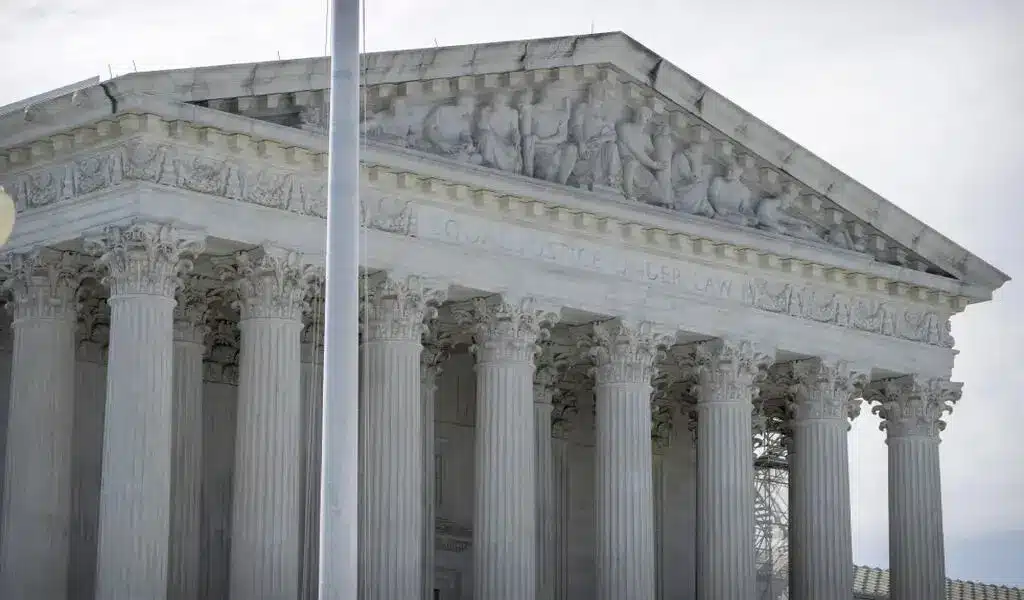
(VOR News) – A ruling that prohibits emergency abortions that contravene the Supreme Court law in the state of Texas, which has one of the most stringent abortion restrictions in the country, has been upheld by the Supreme Court of the United States. The United States Supreme Court upheld this decision.
The justices did not provide any specifics regarding the underlying reasons for their decision to uphold an order from a lower court that declared hospitals cannot be legally obligated to administer abortions if doing so would violate the law in the state of Texas.
Institutions are not required to perform abortions, as stipulated in the decree. The common populace did not investigate any opposing viewpoints. The decision was made just weeks before a presidential election that brought abortion to the forefront of the political agenda.
This decision follows the 2022 Supreme Court ruling that ended abortion nationwide.
In response to a request from the administration of Vice President Joe Biden to overturn the lower court’s decision, the justices expressed their disapproval.
The government contends that hospitals are obligated to perform abortions in compliance with federal legislation when the health or life of an expectant patient is in an exceedingly precarious condition.
This is the case in regions where the procedure is prohibited. The difficulty hospitals in Texas and other states are experiencing in determining whether or not routine care could be in violation of stringent state laws that prohibit abortion has resulted in an increase in the number of complaints concerning pregnant women who are experiencing medical distress being turned away from emergency rooms.
The administration cited the Supreme Court’s ruling in a case that bore a striking resemblance to the one that was presented to it in Idaho at the beginning of the year. The justices took a limited decision in that case to allow the continuation of emergency abortions without interruption while a lawsuit was still being heard.
In contrast, Texas has been a vocal proponent of the injunction’s continued enforcement. Texas has argued that its circumstances are distinct from those of Idaho, as the state does have an exemption for situations that pose a significant hazard to the health of an expectant patient.
According to the state, the discrepancy is the result of this exemption. The state of Idaho had a provision that safeguarded a woman’s life when the issue was first broached; however, it did not include protection for her health.
Certified medical practitioners are not obligated to wait until a woman’s life is in imminent peril before they are legally permitted to perform an abortion, as determined by the state supreme court.
The state of Texas highlighted this to the Supreme Court.
Nevertheless, medical professionals have criticized the Texas statute as being perilously ambiguous, and a medical board has declined to provide a list of all the disorders that are eligible for an exception. Furthermore, the statute has been criticized for its hazardous ambiguity.
For an extended period, termination of pregnancies has been a standard procedure in medical treatment for individuals who have been experiencing significant issues. It is implemented in this manner to prevent catastrophic outcomes, such as sepsis, organ failure, and other severe scenarios.
Nevertheless, medical professionals and hospitals in Texas and other states with strict abortion laws have noted that it is uncertain whether or not these terminations could be in violation of abortion prohibitions that include the possibility of a prison sentence. This is the case in regions where abortion prohibitions are exceedingly restrictive.
Following the Supreme Court’s decision to overturn Roe v. Wade, which resulted in restrictions on the rights of women to have abortions in several Republican-ruled states, the Texas case was revisited in 2022.
As per the orders that were disclosed by the administration of Vice President Joe Biden, hospitals are still required to provide abortions in cases that are classified as dire emergency.
As stipulated in a piece of health care legislation, the majority of hospitals are obligated to provide medical assistance to patients who are experiencing medical distress. This is in accordance with the law.
The state of Texas maintained that hospitals should not be obligated to provide abortions throughout the litigation, as doing so would violate the state’s constitutional prohibition on abortions. In its January judgment, the 5th United States Circuit Court of Appeals concurred with the state and acknowledged that the administration had exceeded its authority.
SOURCE: AP
SEE ALSO:
Could Last-Minute Surprises Derail Kamala Harris’ Campaign? “Nostradamus” Explains the US Poll.
-

 News4 years ago
Let’s Know About Ultra High Net Worth Individual
-
Entertainment2 years ago
Mabelle Prior: The Voice of Hope, Resilience, and Diversity Inspiring Generations
-
News11 years ago
Enviromental Groups Tell Mekong Leaders Lao Dam Evaluation Process Flawed
-

 Health4 years ago
How Much Ivermectin Should You Take?
-

 Tech3 years ago
Top Forex Brokers of 2023: Reviews and Analysis for Successful Trading
-
 Lifestyles3 years ago
Aries Soulmate Signs
-

 Entertainment3 years ago
What Should I Do If Disney Plus Keeps Logging Me Out of TV?
-

 Health3 years ago
Can I Buy Ivermectin Without A Prescription in the USA?